
Tesla Rival BYD Bets Big on Pakistan’s EV Future

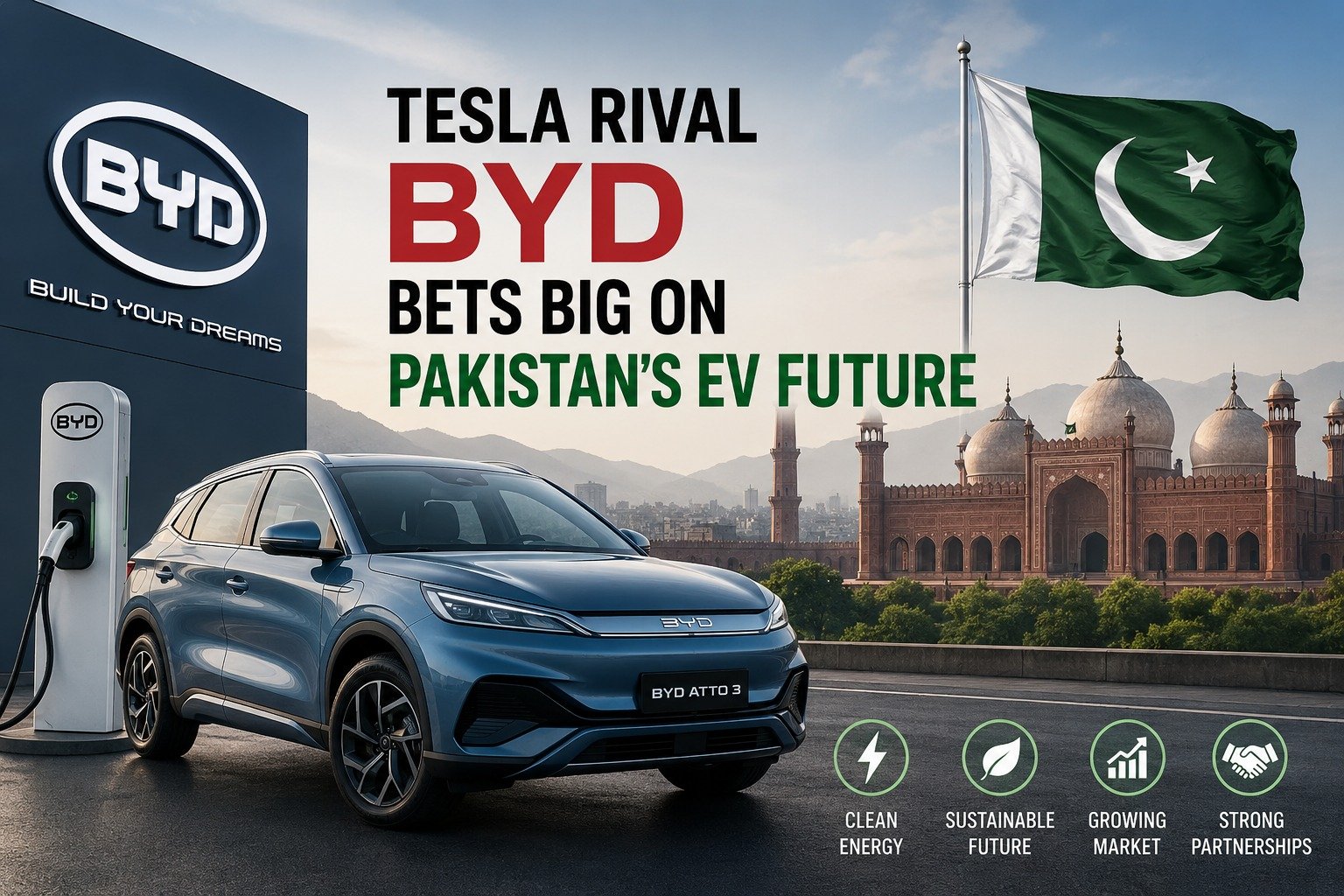
Pakistan’s electric vehicle industry is entering a new phase of growth, and one company is attracting significant attention. Chinese electric vehicle giant BYD, often referred to as Tesla’s biggest global rival, is making a major investment in Pakistan’s emerging EV market. The move has the potential to reshape the country’s automotive industry, accelerate EV adoption, and create new opportunities for consumers and businesses alike.
As fuel prices remain a concern and interest in cleaner transportation continues to grow, BYD’s expansion into Pakistan could mark an important turning point for the local automobile sector. But what exactly is BYD planning, and what does this investment mean for Pakistan’s EV future?
Why BYD’s Entry Matters
BYD is not just another car manufacturer. The company has become one of the world’s largest electric vehicle producers and has expanded rapidly across Asia, Europe, and Latin America.
In recent years, BYD has challenged Tesla’s dominance in the global EV market by offering a wide range of electric and plug-in hybrid vehicles. The company’s success has been driven by advanced battery technology, competitive pricing, and large-scale manufacturing capabilities.
Its decision to invest in Pakistan signals growing confidence in the country’s long-term EV potential.
This is one of the most significant developments in Pakistan’s automotive industry in recent years.
BYD’s Investment Plans in Pakistan
BYD has partnered with local stakeholders to establish a stronger presence in Pakistan’s automobile sector. Reports indicate that the company is moving forward with plans to develop local assembly operations near Karachi.
The project is expected to involve an investment of approximately $150 million, with production activities targeted to begin during 2026. Industry reports suggest the facility could initially produce up to 25,000 vehicles annually, helping meet growing demand for electric and hybrid vehicles in Pakistan.
Local assembly is particularly important because it can reduce costs associated with importing fully built vehicles while improving affordability for Pakistani consumers.
Local production could make electric vehicles more accessible to a wider segment of the market.
Pakistan’s EV Market Is Growing
Pakistan’s electric vehicle sector remains relatively small compared to global markets, but growth momentum is clearly visible.
Government policies promoting cleaner transportation, rising fuel costs, and increasing environmental awareness have encouraged interest in electric mobility.
Several automakers have already introduced electric models in Pakistan, including MG, Kia, Deepal, and other emerging brands. However, BYD’s entry brings global scale and manufacturing expertise that could accelerate market development.
The Pakistani EV market is no longer a future opportunity. It is becoming a present reality.
What Makes BYD Different?
One reason industry experts are paying close attention to BYD is the company’s technological advantage.
BYD manufactures many of its own components, including batteries. Its Blade Battery technology has gained international recognition for safety, durability, and efficiency.
This vertical integration allows the company to maintain greater control over costs and production quality.
Some key advantages include:
- Advanced battery technology
- Strong global supply chain
- Competitive vehicle pricing
- Extensive EV manufacturing experience
- Wide product range from affordable models to premium vehicles
These strengths could help BYD compete effectively in Pakistan’s increasingly competitive automotive market.
Potential Benefits for Pakistani Consumers
The arrival of a major EV manufacturer could create several advantages for local buyers.
More Vehicle Choices
Consumers may gain access to a broader selection of electric and hybrid vehicles across different price segments.
Better Pricing
Local assembly operations can reduce import-related costs and potentially make EV ownership more affordable.
Improved After-Sales Support
A stronger local presence often leads to better dealership networks, maintenance facilities, and spare parts availability.
Lower Running Costs
Electric vehicles generally have lower operating and maintenance expenses compared to conventional fuel-powered cars.
For many households, EV ownership could become a practical financial decision rather than a luxury purchase.
Economic Impact on Pakistan
Beyond vehicle sales, BYD’s investment could generate wider economic benefits.
Job Creation
Assembly plants require engineers, technicians, logistics specialists, and administrative staff.
As operations expand, indirect employment opportunities can also emerge across supporting industries.
Technology Transfer
International automotive investments often contribute to skills development and knowledge sharing.
This can strengthen Pakistan’s manufacturing capabilities and support future industrial growth.
Foreign Direct Investment
Large investments from global companies improve investor confidence and demonstrate international interest in Pakistan’s economy.
Foreign investment in high technology industries can help diversify Pakistan’s economic base.
Challenges Facing the EV Industry
While the outlook is promising, several obstacles remain.
Charging Infrastructure
Pakistan’s charging network is still developing.
Many potential buyers remain concerned about charging availability, particularly for long-distance travel.
Electricity Supply
Reliable electricity remains essential for widespread EV adoption.
Infrastructure improvements will be necessary to support a growing number of electric vehicles.
Consumer Awareness
Many consumers continue to have questions regarding battery life, maintenance costs, resale value, and charging requirements.
Education and awareness campaigns will play an important role in accelerating adoption.
Initial Purchase Costs
Although operating costs are lower, EVs often require a higher upfront investment than conventional vehicles.
Improved financing options may help address this challenge.
Competition in Pakistan’s EV Sector
BYD will not enter an empty market.
Several manufacturers are already positioning themselves within Pakistan’s electric mobility landscape.
Key competitors include:
- MG Motors
- Kia
- Deepal
- Seres
- Other emerging Chinese EV brands
This growing competition could ultimately benefit consumers through improved technology, better pricing, and expanded product offerings.
Healthy competition often drives innovation and improves customer value.
What This Means for Pakistan’s EV Future
Industry analysts believe Pakistan could become an increasingly attractive market for electric vehicles during the coming decade.
Urbanization, rising fuel costs, environmental concerns, and government incentives all support long-term EV growth.
BYD’s investment adds credibility to this outlook.
If the company’s assembly operations meet their targets, Pakistan could see faster adoption of electric vehicles, stronger local manufacturing activity, and greater consumer confidence in EV technology.
BYD’s expansion represents more than a business investment. It reflects growing confidence in Pakistan’s transportation future.
Key Facts at a Glance
Item | Details |
Company | BYD |
Industry | Electric Vehicles |
Investment | Approximately $150 Million |
Planned Production Start | 2026 |
Facility Location | Near Karachi |
Initial Capacity | Around 25,000 Vehicles Per Year |
Market Focus | EVs and Plug-In Hybrids |
Long Term Goal | Expand Presence in Pakistan’s EV Market |
Conclusion
BYD’s decision to invest in Pakistan comes at a time when the country’s electric vehicle sector is gaining momentum. With plans for local assembly, significant financial investment, and ambitious production targets, the company is positioning itself as a major player in Pakistan’s evolving automotive landscape.
While challenges such as charging infrastructure and consumer awareness still need attention, the overall outlook remains positive. Increased competition, local manufacturing, and improved EV accessibility could benefit both consumers and the broader economy.
As Pakistan moves toward a cleaner transportation future, BYD’s investment may prove to be one of the most important milestones in the country’s EV journey.

Top 10 Best Swimming Pools for Kids in Karachi for Safe Family Fun
Fastest 4G Network in Pakistan: Which Network Comes Out on Top?