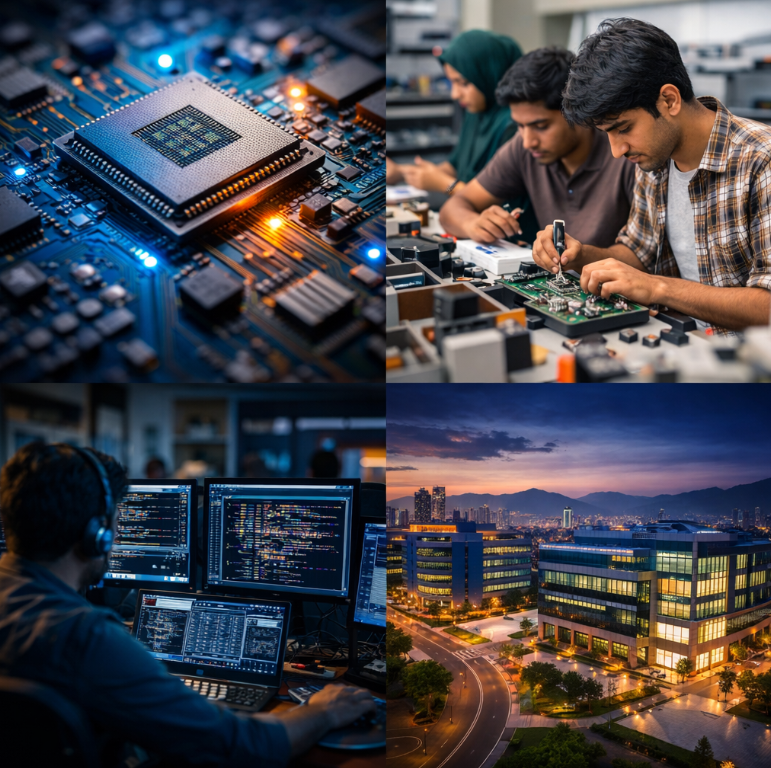
Pakistan is slowly but confidently stepping into the global semiconductor space, and this move could redefine its tech future. Instead of competing with countries that invest billions in chip manufacturing, Pakistan is focusing on a more practical approach developing skilled engineers and digital expertise.
Semiconductors are the backbone of modern technology, powering everything from smartphones to artificial intelligence systems. Recognizing this, Pakistan is investing in education and training rather than expensive factories. Universities like NUST, FAST, and UET are now offering programs in chip design, embedded systems, and AI hardware, preparing students for real-world challenges.
This focus on skills is already showing results. Many Pakistani engineers are working remotely with international tech companies, contributing to projects in chip design, IoT devices, and AI-driven hardware. This not only creates career opportunities but also helps increase Pakistan’s IT exports and global presence.
The government is also supporting this shift through technology zones and startup-friendly policies. The aim is to build a “fabless semiconductor model”, where Pakistan focuses on designing chips while outsourcing manufacturing to other countries. This strategy is cost-effective and aligns with global industry trends.
However, challenges remain. Pakistan does not yet have semiconductor manufacturing plants, research funding is limited, and skilled professionals often move abroad. Despite this, the long-term outlook is promising.
If current efforts continue, Pakistan could become a global hub for chip design and tech services by 2030. With a growing pool of young talent and increasing demand for tech skills, the country is moving in the right direction.