
Pakistan Petrol Price Drops Rs74 – From War Crisis to Peace Relief

A few weeks ago, motorcyclists were lining up at petrol pumps across Karachi, watching prices climb higher with every passing day. Today, those same pumps are handing out fuel at nearly half that rate. This is not a typo. Pakistan just witnessed one of the sharpest petrol price swings in its history, and the reason behind it traces back to a war that almost reshaped the region.
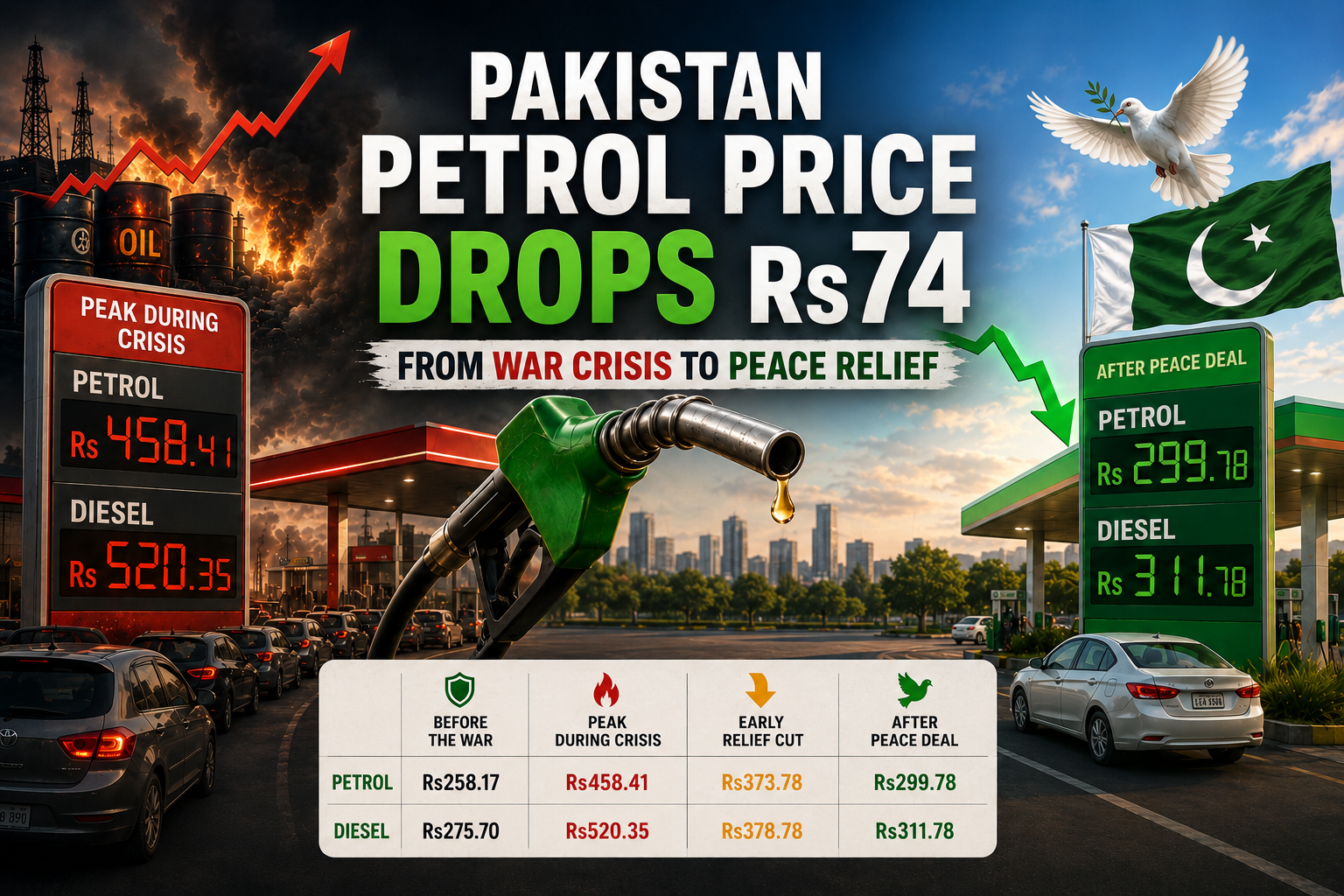
Here is the complete journey of Pakistan’s petrol price over the past few months. It started at Rs258 per litre, surged past Rs458 during regional tension, and has now fallen to Rs299.78 following a peace breakthrough.
Before the War: A Stable Rs258 Per Litre
Just months ago, Pakistan’s petrol price sat at a relatively calm Rs258.17 per litre. Fuel costs followed the usual fortnightly review pattern set by the Oil and Gas Regulatory Authority, with small adjustments based on international crude trends and currency movement. Nothing about this period suggested the volatility that was about to follow.
During the Crisis: Prices Surge Past Rs458
When regional tensions escalated due to the conflict involving the United States and Iran, global oil markets reacted immediately. Fears over potential disruptions through the Strait of Hormuz, a critical shipping route for crude oil, sent prices climbing sharply worldwide. Pakistan, which imports the bulk of its petroleum products, felt the impact almost instantly.
Petrol price in Pakistan shot up to a peak of Rs458.41 per litre. Meanwhile, diesel followed an even steeper climb, rising from Rs275.70 to a staggering Rs520.35 per litre. Transporters, commuters, and households across the country absorbed the shock, with daily commute and freight costs rising sharply within weeks.
The Big Cut: Rs74 Off Petrol, Rs67 Off Diesel
Once diplomatic efforts succeeded in easing the regional conflict, global oil markets responded almost immediately. As a result, tanker traffic resumed through the Strait of Hormuz. Brent crude, which had spiked sharply during the crisis, settled back to around $80 per barrel. With supply fears fading, Pakistan’s government wasted no time passing the benefit on to citizens.
The government had already started with a smaller Rs4 cut on petrol and Rs2 on diesel in mid-June. However, the bigger announcement came directly from Prime Minister Shehbaz Sharif, who addressed the National Assembly with the news consumers had been waiting for. He confirmed a reduction of Rs74 per litre in petrol and Rs67 per litre in diesel, citing easing regional tensions and improving conditions in international oil markets as major factors behind the relief.
This brought petrol price down from Rs373.78 to Rs299.78 per litre, while diesel dropped from Rs378.78 to Rs311.78 per litre.
Phase | Petrol Price | Diesel Price |
Before the war | Rs258.17 | Rs275.70 |
Peak during crisis | Rs458.41 | Rs520.35 |
Early relief cut | Rs373.78 | Rs378.78 |
After the peace deal | Rs299.78 | Rs311.78 |
The Prime Minister said the reduction reflects improving regional stability and lower international oil prices. According to the government, the objective is to pass the benefit of easing global fuel costs on to consumers as quickly as possible.
What This Means for the Average Pakistani
For millions of motorcyclists, rickshaw drivers, and small business owners, this cut arrives as genuine breathing room. Furthermore, the numbers make that relief easy to see. A typical motorcyclist using around 15 litres of petrol per week was paying close to Rs5,606 per week at the crisis peak of Rs458.41 per litre. At the new rate of Rs299.78, that same 15 litres now costs roughly Rs4,497, saving close to Rs4,400 every month for a single bike rider alone.
For households running a car or a small business that relies on diesel-powered transport, the monthly savings climb even higher. This is mainly due to the steeper Rs67 cut. Transport fares and freight charges, which often lag behind fuel price changes, are also expected to gradually adjust downward in the coming weeks, extending this relief beyond just those filling their own tanks.
Future fuel prices will continue to depend on international oil markets, exchange rate movements, and regional stability. As with previous revisions, further adjustments may occur during upcoming fuel price reviews.
For consumers, the biggest impact will likely be seen in transportation costs, delivery charges, and everyday commuting expenses over the coming weeks.
Final Thoughts
Pakistan’s fuel price story over the past few months reads like a rollercoaster, climbing under pressure from a regional war and now falling sharply as peace takes hold. For consumers who endured weeks of rising costs, this Rs74 cut feels less like a routine price revision and more like a long-awaited exhale.
Have you noticed the difference at the pump this week? Share your thoughts in the comments below.
Frequently Asked Questions
What is the new petrol price in Pakistan?
Petrol now costs Rs299.78 per litre after a Rs74 reduction announced by the Prime Minister following regional peace developments.
Why did petrol prices rise so high during the crisis?
Prices spiked due to fears over disrupted oil shipments through the Strait of Hormuz amid regional tension, pushing petrol to a peak of Rs458.41 per litre.
Will diesel prices drop as well?
Yes. Diesel has also been reduced by Rs 67 per litre, bringing the new price down to Rs 311.78 per litre from Rs 378.78.
Is this the final petrol price cut for 2026?
The government has signalled that further price adjustments may follow, depending on global oil trends and continued regional stability.

Top 10 Best Swimming Pools for Kids in Karachi for Safe Family Fun
Fastest 4G Network in Pakistan: Which Network Comes Out on Top?