
Pakistan Budget 2026: What to Expect From the Upcoming Federal Budget?

The upcoming Pakistan Budget 2026 is one of the most closely watched economic events of the year. As the government prepares to unveil its fiscal roadmap for 2026 to 2027, businesses, investors, salaried individuals, and consumers are eager to understand how the new budget could affect taxes, inflation, development spending, and economic growth.
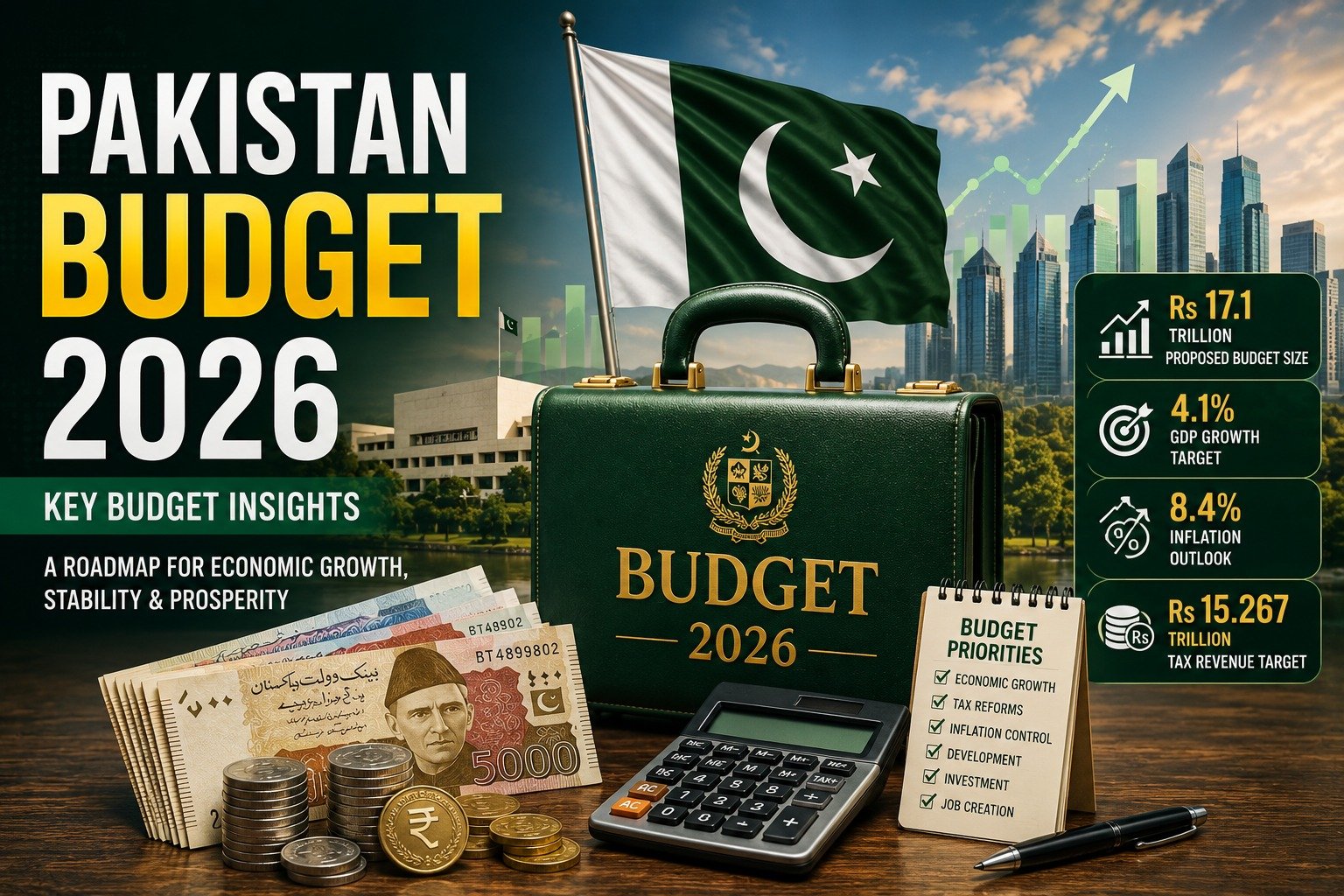
According to recent budget planning reports, the government is considering a Rs 17.1 trillion federal budget, with a 4.1% GDP growth target, an 8.4% inflation projection, and a Rs 15.267 trillion tax revenue target for the next fiscal year. These figures highlight the government’s efforts to balance economic growth with fiscal discipline while continuing reforms under its economic stabilization program.
This article explores the key expectations, economic targets, major spending priorities, and potential impacts of the Pakistan Budget 2026.
Pakistan Budget 2026 at a Glance
Key Indicator | Expected Figure |
Proposed Budget Size | Rs 17.1 Trillion |
GDP Growth Target | 4.1% |
Inflation Projection | 8.4% |
Tax Revenue Target | Rs 15.267 Trillion |
Federal PSDP | Rs 1.1 Trillion |
Petroleum Levy Target | Rs 1.727 Trillion |
Defence Spending | Rs 2.665 Trillion |
Debt Servicing | Rs 7.824 Trillion |
These proposed figures indicate that the government remains focused on economic stability, revenue generation, and sustainable growth.
Why the Pakistan Budget 2026 Matters
The federal budget serves as the government’s financial blueprint for the coming fiscal year. It determines how public funds will be collected, allocated, and invested across different sectors of the economy.
Moreover, the budget directly influences taxation, public development projects, employment opportunities, inflation management, and investor confidence. Therefore, the decisions announced in the budget can affect both large corporations and ordinary households.
With Pakistan continuing efforts to strengthen economic recovery, the upcoming budget is expected to play a critical role in shaping the country’s financial outlook.
Key Economic Targets for FY 2026 to 2027
One of the most important aspects of the upcoming budget is the government’s economic targets.
Recent planning discussions suggest that authorities are aiming for a 4.1% GDP growth target while keeping inflation around 8.4%. These targets reflect expectations of improved performance in agriculture, manufacturing, services, and exports.
Furthermore, policymakers hope that economic stability and improved business confidence will encourage greater private sector investment.
Another major objective is achieving a Rs 15.267 trillion tax revenue target, which would represent a significant increase in revenue collection efforts.
Expected Tax Reforms
Tax policy is likely to remain the centerpiece of the federal budget.
The government is expected to focus on expanding the tax base, improving compliance, and reducing tax evasion. Additionally, authorities may introduce measures aimed at documenting previously untaxed sectors of the economy.
Potential areas of reform include:
- Broadening the tax net
- Increased digital tax monitoring
- Enhanced tax compliance measures
- Reforms in sales tax collection
- Simplification of tax procedures for businesses
These initiatives could help the government achieve its ambitious revenue targets while reducing reliance on borrowing.
How IMF Discussions Could Shape the Budget
The International Monetary Fund continues to influence Pakistan’s fiscal planning.
As a result, many analysts expect the budget to include measures focused on tax reforms, fiscal discipline, and sustainable revenue generation. IMF discussions have also emphasized controlling deficits and improving public financial management.
Consequently, while the government may introduce some relief measures, large scale spending increases could remain limited.
The challenge for policymakers will be balancing economic growth with the need to maintain financial stability.
Development Spending and Infrastructure Projects
Development spending is expected to remain a major priority in Budget 2026.
Reports suggest that the national development outlay could exceed Rs 4 trillion, while the federal Public Sector Development Programme may receive more than Rs 1.1 trillion.
These funds are likely to support:
- Road and transport infrastructure
- Energy projects
- Water management initiatives
- Education facilities
- Healthcare services
- Digital connectivity projects
Furthermore, development spending can stimulate economic activity while creating employment opportunities across the country.
Impact on Businesses and Investors
Businesses across Pakistan are closely monitoring the upcoming budget announcements.
Many companies are hoping for business friendly policies, investment incentives, and regulatory reforms that improve competitiveness. In addition, investors are looking for measures that strengthen confidence in Pakistan’s economic direction.
The government’s focus on foreign investment, export growth, and private sector development could benefit several industries, including technology, manufacturing, retail, logistics, and tourism.
If policymakers successfully balance fiscal discipline with growth oriented reforms, the budget could create new opportunities for businesses and entrepreneurs.
What Salaried Individuals Can Expect
Salaried individuals are among the groups most affected by federal budget decisions.
Many employees will closely watch announcements regarding:
- Income tax slabs
- Salary relief measures
- Pension adjustments
- Inflation related support
- Utility costs
Although no final decisions have been announced, there is significant public interest in tax relief measures that can help offset rising living costs.
Job Creation and Economic Opportunities
Employment generation remains a major economic priority.
Government planning discussions indicate a focus on creating approximately 2 million new jobs through investment, industrial growth, and development initiatives.
Moreover, stronger economic growth can encourage hiring across both public and private sectors.
Young professionals and recent graduates will be particularly interested in policies that support entrepreneurship, digital innovation, and skill development.
Challenges Facing the Government
While expectations remain high, the government faces several significant challenges.
These include:
- Managing public debt
- Controlling inflation
- Increasing tax revenues
- Maintaining fiscal discipline
- Supporting economic growth
- Meeting IMF related commitments
Therefore, the budget must carefully balance competing priorities while addressing the needs of citizens and businesses.
Conclusion
The Pakistan Budget 2026 is expected to shape the country’s economic direction for the coming fiscal year. With a proposed Rs 17.1 trillion federal budget, a 4.1% GDP growth target, and a Rs 15.267 trillion tax revenue goal, the government faces the challenge of promoting growth while maintaining fiscal stability.
Moreover, tax reforms, development spending, IMF related commitments, and investment policies will influence businesses, consumers, and investors alike. As budget day approaches, understanding these proposals can help individuals and organizations prepare for the opportunities and challenges ahead.
FAQs
When will Pakistan Budget 2026 be announced?
According to recent reports, the federal government is expected to present the budget in the National Assembly in early June 2026.
What is the expected size of Pakistan Budget 2026?
The proposed federal budget size is approximately Rs 17.1 trillion.
What is the expected GDP growth target for FY 2026 to 2027?
The government is considering a 4.1% GDP growth target for the next fiscal year.
What is the expected tax revenue target?
The Federal Board of Revenue is expected to receive a target of Rs 15.267 trillion.
Why is Pakistan Budget 2026 important?
The budget determines government spending, taxation policies, development priorities, and economic strategies that affect businesses and citizens throughout the country.

Top 10 Best Swimming Pools for Kids in Karachi for Safe Family Fun
Fastest 4G Network in Pakistan: Which Network Comes Out on Top?