
New Provinces in Pakistan: Why Mohsin Naqvi’s “System Has Collapsed” Remark Sparked Debate

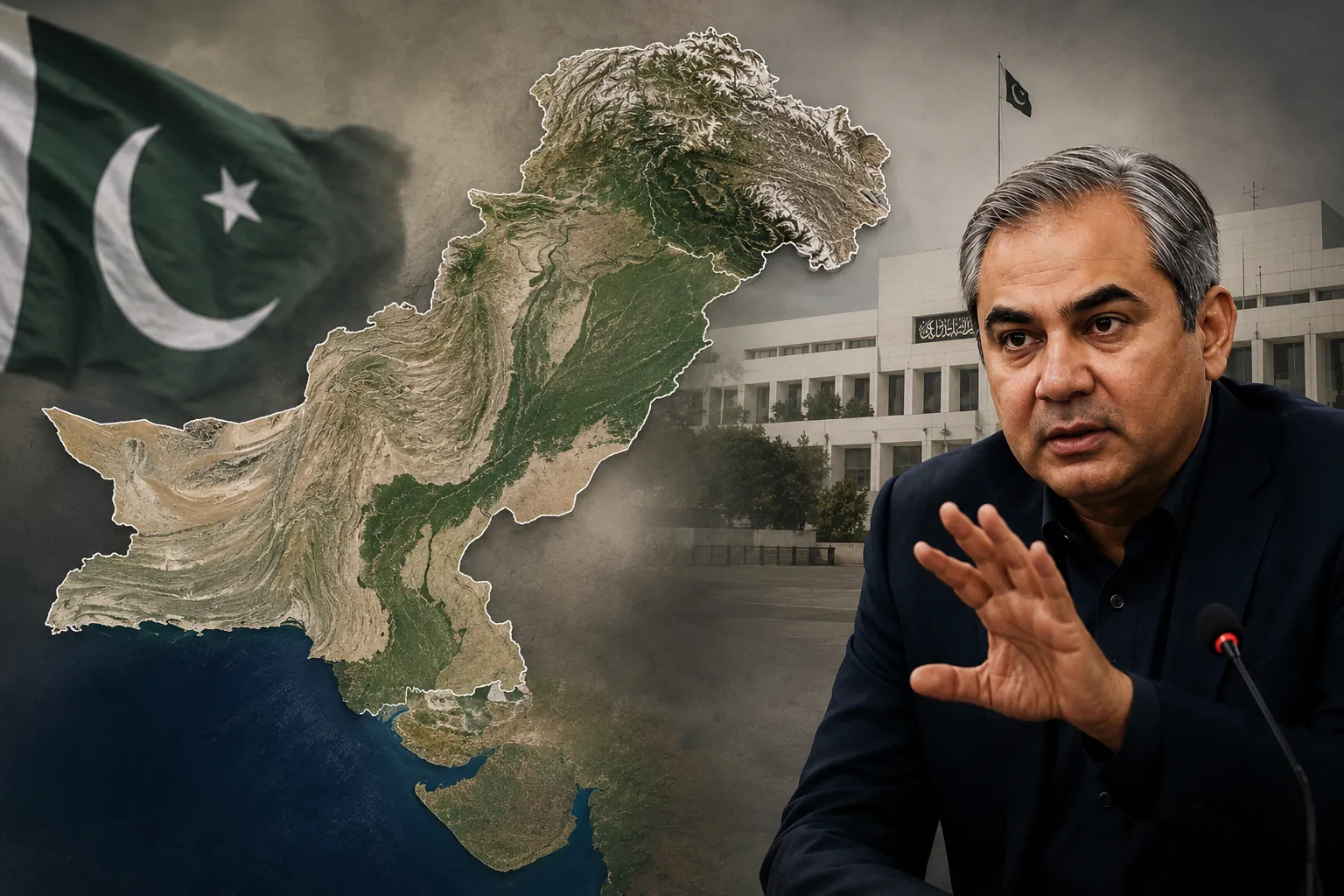
A minister stands up at an economic summit, says the country’s governance system has collapsed, and by the following week, a coalition partner is publicly thanking him while the Sindh government is calling the idea “worn-out.” That’s where new provinces in Pakistan stand as a debate right now.
Quick Answer
Reactions have split unevenly: MQM-P and PTI’s Chief Whip back the idea, PPP and JUI-F have rejected it, and PML-N, the party that would need to lead any constitutional amendment, hasn’t taken an official position. No new province has been approved.
Quick Facts: New Provinces Debate in Pakistan
Here’s where things stand before the full breakdown below.
| Fact | Detail |
| Trigger | Interior Minister Mohsin Naqvi’s remarks, Pakistan Economic Summit 2026, July 30 |
| His claim | Pakistan’s governance system has “collapsed” |
| Broadly in favour | MQM-P, IPP, PTI (on South Punjab specifically) |
| Broadly against | PPP/Sindh government, JUI-F, Lahore HC Bar Association |
| Ruling party (PML-N) | No official party position; internally divided |
| Sindh CM’s response | Called it a “stereotype” Sindh “will not accept” |
| Legal status | No new province approved; not official government policy |
| Constitutional requirement | Amendment + two-thirds majority in affected provincial assembly (Article 239) |
| Most contested proposal | Making Karachi a separate province from Sindh |
| Viral 18-unit map | Circulating on social media; not endorsed by any official |
What Did Mohsin Naqvi Actually Say?
Speaking at the Pakistan Economic Summit 2026 in Islamabad on July 30, Naqvi said Pakistan’s existing governance system “has collapsed,” and that the country’s problems “will not be solved even after 10 years” without fundamental change, according to Dawn.
He didn’t name specific provinces or present a formal plan. His actual ask was procedural: that “all political parties should sit together in a single room, whether for a day, a month or a year,” to settle the question of new administrative units, per Business Recorder.
Who’s For It, and Who’s Against It?
The reaction has been messier than a simple coalition-vs-opposition split. No party has left the coalition over this, and even PML-N is internally divided.
Broadly in favour:
- MQM-P: Health Minister Mustafa Kamal called Naqvi’s remarks “music to our ears,” per Arab News.
- IPP: Privatization Minister Abdul Aleem Khan proposed splitting each of Pakistan’s four provinces into three regions.
- PTI: Initially critical through party chairman Barrister Gohar Ali Khan, but Chief Whip Malik Amir Dogar later said PTI agrees with creating new provinces, specifically backing South Punjab as a starting point, according to The Current.
- Defence Minister Khawaja Asif (PML-N): Personally agreed with Naqvi’s assessment in a post on X, though this is his individual view, not a party position.
Broadly against:
- PPP / Sindh government: Sindh CM Murad Ali Shah called it a “stereotype” the people of Sindh “will not accept,” per Dawn.
- JUI-F: Spokesperson Aslam Ghauri called it an admission of failure, saying the remarks meant Pakistan’s “hybrid system” had failed.
- Lahore High Court Bar Association: Condemned Naqvi’s statement as unconstitutional, per the same Dawn report cited above.
Genuinely unresolved:
- PML-N, the party that would have to lead any constitutional amendment, has no official position. An Express Tribune source described the party as caught “between the devil and the deep sea,” since PML-N and PPP could both lose politically if new provinces confine them to specific regions.
- ISPR: DG Lt Gen Sharif Chauhry stressed the matter must follow “proper constitutional procedure,” a procedural comment, not an endorsement, per Pakistan Today.
How Can a New Province Actually Be Created?
Pakistan’s Constitution doesn’t set out a clear process for creating an entirely new province, only for adjusting existing provincial boundaries. Any real move needs a constitutional amendment first.
Under Article 239, changing a province’s boundaries requires:
- A bill passed by two-thirds majority in both the National Assembly and the Senate.
- A two-thirds majority vote in the assembly of the affected province specifically.
- Presidential assent.
That provincial-assembly requirement is the practical bottleneck. It means Sindh’s own assembly, currently PPP-controlled, would have to approve any plan to carve Karachi out of Sindh, which is precisely why PPP’s opposition matters more than any other party’s.
Creation of New Provinces: Which Ones Have Actually Been Proposed?
None of the following have government approval. They’re longstanding political demands, some decades old, that this debate has revived.
| Proposal | Backed by | Status |
| South Punjab | PPP, PTI (both have long supported it) | Political demand, no bill passed |
| Karachi / urban Sindh | MQM-P | Strongly opposed by PPP and Sindh government |
| Hazara | Regional demand within KP | Political demand, no formal process started |
| Bahawalpur | Historical claim (former princely state) | Periodically raised, no formal process started |
The Karachi Province Debate: Why It’s the Real Flashpoint
Karachi carries the most financial weight of any proposal here, which is exactly why it’s the hardest fight.
- Why PPP resists it: Separating Karachi would mean Sindh losing a major share of its revenue base. Losing it would mean Sindh losing its biggest revenue base.
- Why MQM-P wants it: The party argues Karachi’s residents generate outsized revenue but get comparatively little back in provincial services.
What Are the Arguments For and Against New Provinces?
The case for:
- Smaller units bring government closer to citizens, cutting travel to distant provincial capitals.
- Naqvi and others point to India (14 states at independence, now 29) and Indonesia as examples of administrative expansion over time.
- PML-N, PPP, and PTI have all expressed support for new provinces in principle at different points. .
The case against:
- Pakistan’s four provinces already run on federal transfers; provincial tax revenue covers roughly 12-15% of Punjab’s spending, and less for smaller provinces. New provinces would need their own bureaucracies, police, and courts without necessarily fixing that revenue gap.
- More provinces would also mean renegotiating the National Finance Commission (NFC) award, the formula that splits federal tax revenue between provinces, a politically difficult process even among the current four.
- Critics, including former Deputy Chairman of the Planning Commission Nadeem-ul-Haq, argue the real fix is empowering local governments, not redrawing provincial maps.
- Pakistan’s own history offers a cautionary example: the One Unit policy (1955-1970), which merged West Pakistan’s provinces into a single administrative block, deepened regional resentment and was later cited among the grievances surrounding the 1971 breakup.
New Provinces in Pakistan: What Happens Next?
Nothing is imminent. No bill has been introduced, no referendum scheduled, and PML-N, the party that would need to lead any constitutional amendment, hasn’t stated a position. The debate has resurfaced, not advanced to implementation. Chokus will update this page if that changes.
Frequently Asked Questions
What is the new provinces debate in Pakistan about?
Whether Pakistan should create additional provinces or administrative units beyond its current four, reignited by Interior Minister Mohsin Naqvi’s July 2026 remarks that the governance system had “collapsed.”
What did Mohsin Naqvi say about new provinces?
At the Pakistan Economic Summit on July 30, 2026, Naqvi said the existing system had “collapsed” and called on political parties to reach consensus on new administrative units, without naming specific provinces.
How can a new province be created under Pakistan’s Constitution?
Through a constitutional amendment under Article 239: a two-thirds majority in both the National Assembly and Senate, plus a two-thirds majority in the affected province’s own assembly, followed by presidential assent.
Is Karachi going to become a separate province?
Not currently. MQM-P has long demanded it, but the PPP-led Sindh government strongly opposes the idea, and no formal process has started.
Is South Punjab going to become a new province?
Not currently. Both PPP and PTI have historically supported the idea, but no constitutional amendment has been introduced.
Has the government officially approved any new province?
No. As of this writing, no new province has been approved, and no bill has been introduced in Parliament.
New Provinces in Pakistan: Where the Debate Actually Stands
The debate over new provinces in Pakistan has resurfaced, driven by one minister’s remarks and amplified by a viral, unofficial map, not a government plan in motion. The coalition’s public reaction so far breaks down more by party interest than by any formal vote: MQM-P and IPP see opportunity, PPP sees an existential threat to Sindh’s revenue base, and PML-N has said nothing official. Article 239’s requirement for the affected province’s own assembly to agree means Karachi’s fate, in particular, sits entirely in PPP’s hands for now.
For more on Pakistan’s political developments, follow Chokus’s ongoing Pakistan news coverage.
Written by Huzaifa Khan, who covers Pakistan’s politics and governance beat for Chokus. Last updated August 12, 2026. This is a developing political debate, not settled policy; claims here are attributed to the officials and parties who made them and may shift as the discussion continues.

Top 10 Best Swimming Pools for Kids in Karachi for Safe Family Fun
Fastest 4G Network in Pakistan: Which Network Comes Out on Top?