
Inflation Rate in Pakistan 2026: What’s Getting Cheaper, What’s Not

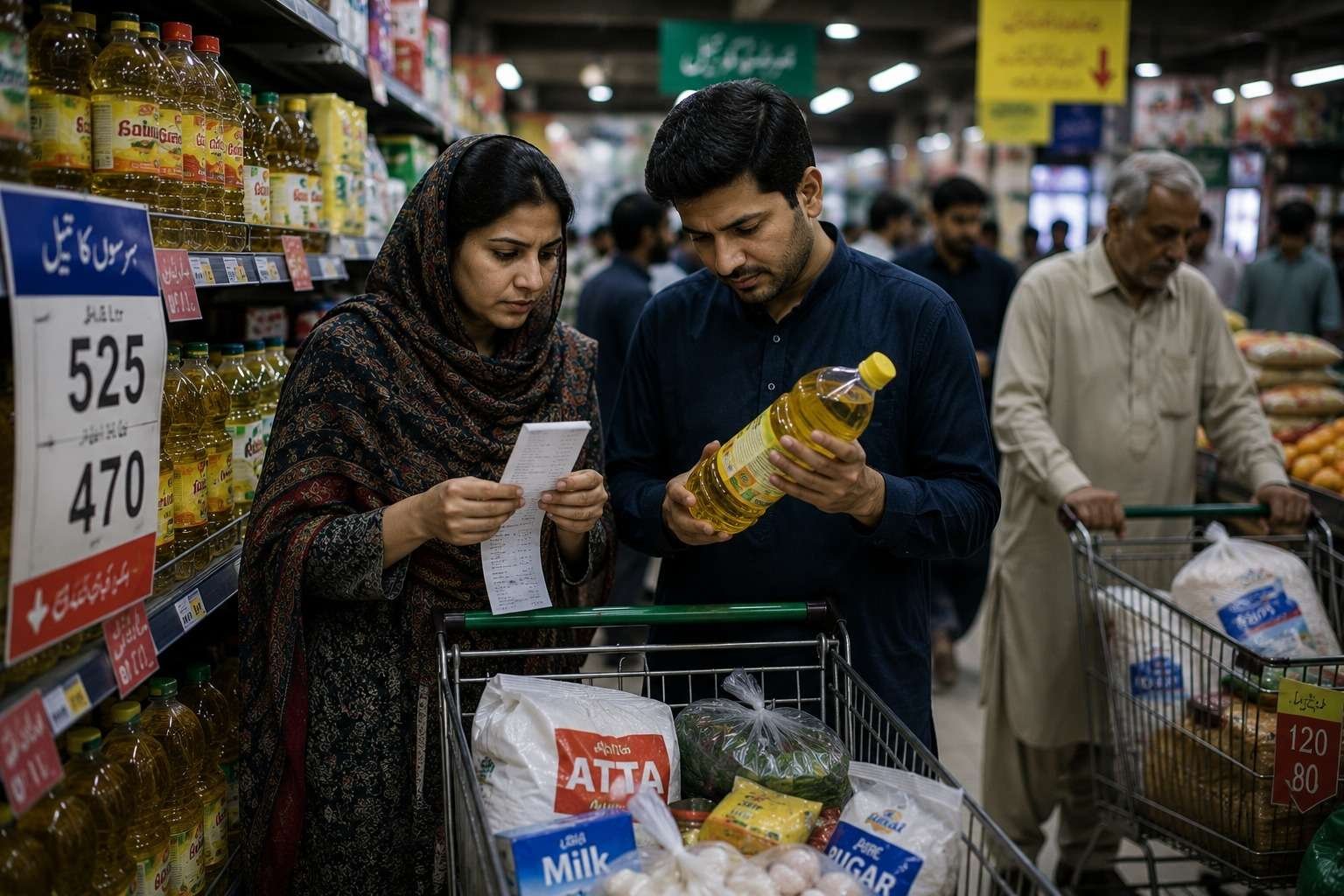
Pakistan’s inflation rate stood at 11.1% year-on-year in June 2026, according to the Pakistan Bureau of Statistics, down from 11.7% in May but still well above the State Bank’s 5 to 7% target range. Prices actually eased slightly on a monthly basis, the CPI fell 0.3% in June, even as select staples kept climbing sharply. That mix of headline relief and pocket-level pain is exactly what makes the current inflation rate in Pakistan hard to read from one number alone.
This article breaks down what’s rising, what’s falling, why it’s happening, and what the State Bank is doing about it, part of the ongoing Pakistan news and economic coverage on Chokus.
Quick Facts: Inflation Rate in Pakistan at a Glance
Pakistan’s inflation rate is currently easing on a monthly basis but remains in double digits year-on-year, driven mainly by energy and transport costs. The table below summarizes the numbers that matter most right now.
| Fact | Detail |
| Current inflation rate (June 2026) | 11.1% YoY |
| Previous month (May 2026) | 11.7% YoY |
| Monthly change (June) | -0.3% MoM |
| FY2025-26 average inflation | 7.05% |
| SBP target range | 5% to 7% |
| SBP policy rate | 11.5% (unchanged since April 2026) |
| Main driver | Energy and transport costs tied to Middle East conflict |
| Getting cheaper (monthly) | Chicken, eggs, petrol, electricity |
| Getting more expensive (yearly) | Wheat, flour, LPG, tomatoes |
What Is Pakistan’s Current Inflation Rate in 2026?
The inflation rate in Pakistan for June 2026 came in at 11.1% year-on-year, according to PBS data, easing from May’s 11.7% but still nearly double the central bank’s target ceiling. Urban inflation ran slightly hotter at 11.2%, while rural inflation came in at 10.9%. Both numbers cooled from May, yet both remain far above the 3.0% and 3.6% recorded in the same areas a year earlier.
The trend over the past four months tells the real story: 7.3% in March, then a sharp jump to 10.9% in April, 11.7% in May, and 11.1% in June. Inflation didn’t drift upward gradually. It spiked hard in April and has only started cooling since.
How Does This Compare to the Pakistan Inflation Rate by Year?
Looking at Pakistan’s inflation rate by year over the past five years shows just how volatile the picture has been.
| Year | Annual Inflation Rate |
| 2022 | 19.87% |
| 2023 | 30.77% |
| 2024 | 12.63% |
| 2025 | 3.53% |
| 2026 (YTD, through June) | 8.94% |
Pakistan went from its worst inflation crisis in decades (2023) to a near nine-year low (2025) in under two years, then climbed back into double digits within the first half of 2026. The annual inflation rate in Pakistan swung from under 4% to over 30% within just three years, which shows how quickly a single year’s budget planning can go wrong. That whiplash matters because it shapes how people plan: a household budgeting off 2025’s 3.53% would have been caught badly off guard by April 2026’s jump to 10.9%.
What Is the Average Inflation Rate in Pakistan?
Over the 65-year period from 1960 to 2025, the average inflation rate in Pakistan worked out to roughly 8.6% per year, according to long-run CPI data. The highest reading ever recorded was 37.97% in May 2023, while the lowest was -10.32% (outright deflation) in February 1959.
Seen against that history, the current 11.1% rate is high, though not unprecedented. It sits well above the long-run average but far below the 2023 peak, which is a useful reference point for anyone trying to judge whether today’s numbers count as a genuine crisis or a milder correction.
Why is the inflation rate in Pakistan So High Right Now?
The State Bank’s own Monetary Policy Committee pointed to a specific trigger: the Middle East conflict. In its June 2026 policy statement, the MPC noted that the conflict “fueled inflation directly through the hike in domestic energy prices as well as indirectly through the rise in transportation and production costs.” Arif Habib Limited echoed this, attributing the year-on-year uptick largely to energy and transport costs tied to rising oil prices amid ongoing geopolitical tensions.
Because Pakistan imports most of its energy, any spike in global oil prices flows almost immediately into domestic petrol, diesel, and electricity costs, and from there into everything that needs to be transported or manufactured.
How Are Transport Costs Affecting Inflation?
Transport costs rose 25.72% year-on-year in June 2026, even though they actually fell 7.22% compared to May as global oil prices eased following Middle East de-escalation. That single category illustrates how sensitive Pakistan’s inflation rate is to international energy markets. When oil drops, relief shows up within weeks; when it spikes, so does the CPI.
Why Are Food Prices Rising Even as Inflation Eases?
Despite the headline number cooling, food inflation Pakistan told a different story in June. Tomato prices jumped 90% month-on-month, onions rose 21%, and potatoes climbed 18%. On a yearly basis, wheat prices were up 65% and flour 55%, driven by supply constraints rather than short-term shocks. Meanwhile, LPG prices rose more than 60% year-on-year.
Not every food item moved the same direction, though. Chicken fell 22% and eggs dropped nearly 11% in June alone, showing that even within one CPI report, the picture varies sharply by item, not just by category.
What Is CPI and How Is It Calculated in Pakistan?
The Consumer Price Index (CPI) measures the change over time in prices for a fixed basket of goods and services that households actually buy. It’s the single number behind every inflation headline.
How Does PBS Calculate the CPI?
PBS calculates CPI Pakistan monthly using prices collected from 68 markets across 35 urban centers and 27 rural markets, covering more than 350 individual items, real prices gathered by hand, not estimates.
Which Categories Carry the Most Weight in Pakistan’s CPI?
Each spending category carries a different weight in the basket, which is why a single price spike, like tomatoes, doesn’t move the headline number as much as a broad-based rise across housing or transport would.
| CPI Category | Weight in Basket |
| Food & Non-Alcoholic Beverages | 35% |
| Housing, Water, Electricity, Gas | 24% |
| Clothing & Footwear | 9% |
| Restaurants & Hotels | 7% |
| Transport | 6% |
| Miscellaneous Goods & Services | 5% |
| Furnishing & Household Equipment | 4% |
| Education | 4% |
| Health | 3% |
| Communications | 2% |
| Recreation & Culture | 2% |
| Alcoholic Beverages & Tobacco | 1% |
Food alone makes up over a third of the average household’s spending in this index, so what happens to food inflation in Pakistan almost always drives the headline number more than any other category.
What Is the State Bank Doing to Control Inflation?
The State Bank of Pakistan raised its policy rate by 100 basis points to 11.5% on April 27, 2026, the first hike in nearly three years, specifically to get ahead of the inflation spike triggered by the Middle East conflict. As Business Recorder reported, the MPC kept the rate unchanged at its June 15, 2026 meeting, judging that the current stance was appropriate given signs that inflation was starting to moderate.
Officially, the SBP is still targeting its medium-term range of 5% to 7%, a level it hasn’t hit since early 2025. The central bank’s own outlook expects inflation to remain in double digits for the next few months before gradually easing, so a quick return to single digits looks unlikely before late 2026.
What’s Actually Getting Cheaper or More Expensive Right Now?
Because “inflation eased” and “prices are falling” aren’t the same thing, here’s a direct breakdown of June 2026’s month-on-month price movements for common household items.
| Item | Monthly Change (June 2026) | Yearly Change |
| Tomatoes | +90% | Volatile, seasonal |
| Onions | +21% | N/A |
| Potatoes | +18% (monthly) | -40% (yearly) |
| Wheat | N/A | +65% (yearly) |
| Flour | +2.2% | +55% (yearly) |
| Ghee | +1.9% | N/A |
| Chicken | -22% | N/A |
| Eggs | -11% | -33% (yearly) |
| Petrol/petroleum products | -12% | N/A |
| Electricity | -4.3% | N/A |
| LPG | N/A | +60%+ (yearly) |
| Sugar | N/A | -16% (yearly) |
The pattern here matters more than any single number: energy and utility prices are correcting downward month to month, while structural food items like wheat, flour, and LPG remain sharply higher than a year ago. If your household budget is dominated by staples rather than fuel, June’s “easing” inflation probably didn’t feel like relief at all.
What Does This Mean for the Average Pakistani Household?
A headline rate of 11.1% still means prices, on average, are more than a tenth higher than a year ago. Relief is also gradual rather than immediate, based on the government’s own outlook. Households that spend a larger share of their income on food, and that describes most low- and middle-income families given food’s 35% CPI weight, are likely to keep feeling squeezed even as the topline number cools.
The Sensitive Price Indicator, which tracks the weekly cost of essentials for the lowest income quintile specifically, actually accelerated to 12.8% in June, up from 12.0% in May. That’s a useful reminder that national averages can ease while the people most exposed to food and fuel costs experience the opposite. For deeper context on how broader economic shifts are playing out across Pakistan, Chokus covers this in its economy news section.
Final Word
Pakistan’s inflation rate in 2026 is a story of two speeds: energy and transport costs are correcting as global oil prices ease, while structural food costs, wheat, flour, and LPG, keep climbing regardless of the headline trend. The SBP’s 11.5% policy rate reflects that tension exactly: high enough to signal caution, not so high that it chokes off the recovery already underway.
Is your household feeling the “easing” inflation, or does it still feel like prices only go up? Share your experience in the comments; real numbers from real budgets tell a fuller story than any single CPI report.
Written by the Chokus.pk team. Last updated July 17, 2026, based on the Pakistan Bureau of Statistics’ June 2026 monthly inflation report, the most recent data available at the time of publishing.
Frequently Asked Questions
What is the current inflation rate in Pakistan today?
As of the latest Pakistan Bureau of Statistics report, Pakistan’s inflation rate stood at 11.1% year-on-year in June 2026, down from 11.7% in May, though still above the SBP’s 5 to 7% target range.
What is the inflation rate in Pakistan measured by?
Pakistan’s inflation rate is measured using the Consumer Price Index (CPI), tracked monthly by the Pakistan Bureau of Statistics from more than 350 items priced in real markets across 35 cities and 27 rural centers, not estimates or surveys.
What is the average inflation rate in Pakistan over the long term?
Pakistan’s average inflation rate from 1960 to 2025 was approximately 8.6% per year, though yearly figures have ranged from a low of -10.32% to a high of 37.97% in May 2023.
Why are food prices rising even though headline inflation is easing?
Food inflation Pakistan is driven by separate supply-side factors, like wheat and flour shortages and higher LPG costs, that don’t move in sync with energy prices, which is why food can keep rising even as the overall CPI cools.
What is the State Bank of Pakistan doing about inflation?
The SBP raised its policy rate to 11.5% in April 2026 to control inflation and has held it steady since, aiming to bring inflation back toward its 5 to 7% medium-term target by late 2026.
What has the yearly inflation rate in Pakistan looked like in recent years?
Pakistan’s annual inflation rate was 19.87% in 2022, spiked to 30.77% in 2023, eased to 12.63% in 2024, dropped to 3.53% in 2025, and has climbed back to roughly 8.94% year-to-date in 2026.
Is inflation in Pakistan expected to come down soon?
The State Bank expects inflation to remain in double digits for the next few months before gradually easing, so a return to the 5 to 7% target range isn’t expected until later in 2026 at the earliest.
What’s the difference between urban and rural inflation in Pakistan?
Urban inflation stood at 11.2% year-on-year in June 2026 versus 10.9% in rural areas. The gap matters because rural households spend a larger share of income on food, so wheat and flour price spikes tend to hit rural budgets harder than the national average suggests.

Top 10 Best Swimming Pools for Kids in Karachi for Safe Family Fun
Fastest 4G Network in Pakistan: Which Network Comes Out on Top?