
US-Iran Peace Deal 2026: Pakistan Emerges as Key Global Mediator

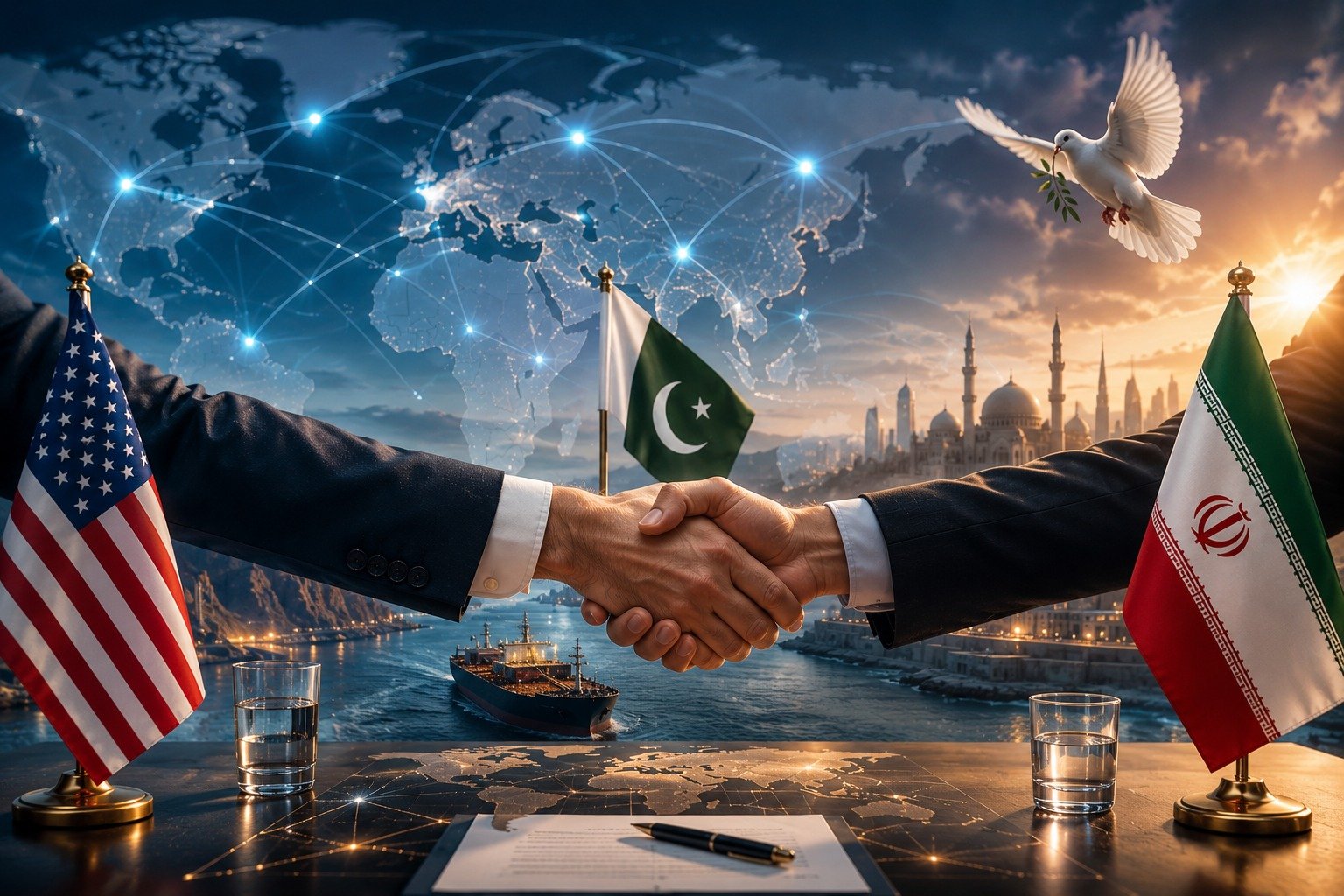
After months of military confrontation, energy market disruption, and growing fears of a wider Middle East war, the United States and Iran have announced a preliminary peace framework that could reshape regional diplomacy and global economic stability. The developing agreement, expected to move into a formal implementation phase in the coming weeks, has already triggered a strong reaction across financial and energy markets.
One of the most significant aspects of the breakthrough is Pakistan’s role as a diplomatic intermediary. According to Reuters reporting, Pakistan helped facilitate communication and support negotiations between Washington and Tehran during a period when direct engagement remained extremely difficult. The agreement has also drawn global attention because of its potential impact on the Strait of Hormuz, a strategic maritime route that carries roughly 20% of the world’s oil and liquefied natural gas shipments.
As the deal enters a critical implementation phase, policymakers, investors, and regional governments are closely watching whether it can deliver lasting stability or merely provide a temporary pause in a volatile conflict.
What Is the US-Iran Peace Deal?
The US-Iran Peace Deal is a developing diplomatic framework intended to end hostilities and establish a structured negotiation process between the two countries.
According to Reuters and Associated Press reporting, the framework includes:
- A cessation of major military operations
- Reopening of the Strait of Hormuz
- A 60-day negotiation period
- Discussions regarding sanctions relief
- Future talks on Iran’s nuclear program
- Broader regional security discussions
While both sides have expressed support for the framework, several provisions still require formal implementation and verification.
How the Conflict Became a Global Crisis
The conflict quickly evolved from a regional confrontation into an international economic and security concern.
Strait of Hormuz Disruption
The Strait of Hormuz remains one of the most strategically important waterways in the world. Around one-fifth of global oil and LNG exports pass through the narrow shipping corridor connecting the Persian Gulf to international markets. When shipping activity became restricted, governments and businesses worldwide faced concerns about supply shortages and rising energy costs.
Oil Price Volatility
Energy markets reacted sharply throughout the crisis. Brent crude traded above $99 per barrel during periods of heightened tension, while concerns over prolonged disruption pushed oil prices higher across global markets. Following reports of a peace agreement, Brent crude fell to around $83–84 per barrel, marking its lowest level in approximately three months.
Global Market Impact
The uncertainty extended beyond energy markets. Higher shipping costs, increased insurance premiums, supply chain concerns, and inflationary pressure affected businesses and consumers worldwide. Stock markets across Asia responded positively after the announcement, with investors welcoming signs of reduced geopolitical risk.
Humanitarian and Regional Consequences
Beyond economics, the conflict produced serious humanitarian consequences across the region.
Thousands of people were reportedly killed or injured during the escalation, while many families faced displacement and disruption to essential services. Damage to infrastructure and prolonged insecurity created additional challenges for affected communities.
Although casualty estimates continue to vary among reports, analysts broadly agree that the conflict became one of the most significant regional crises of 2026 due to its military, economic, and diplomatic implications.
Pakistan’s Role in the Peace Process
Pakistan emerged as a key diplomatic actor throughout the negotiations.
Reuters reported that Pakistani leadership played an important role in facilitating communication between the United States and Iran as both sides searched for a path toward de-escalation. Islamabad’s diplomatic engagement reportedly included support for ceasefire discussions, indirect communication channels, and coordination with regional stakeholders.
Key contributions included:
- Supporting indirect dialogue between the parties
- Encouraging diplomatic engagement during periods of tension
- Assisting efforts to maintain ceasefire discussions
- Coordinating with regional and international stakeholders
- Promoting negotiated solutions over military escalation
This role has significantly elevated Pakistan’s visibility in international diplomacy and highlighted the growing influence of middle-power nations in conflict resolution.
Why Pakistan’s Mediation Matters
Strategic Position
Pakistan shares a border with Iran and maintains diplomatic relationships across the Middle East, giving it a unique position in regional affairs.
Diplomatic Credibility
The mediation effort demonstrates how countries outside traditional great-power politics can help facilitate communication during major international crises.
International Recognition
If the agreement succeeds, Pakistan’s involvement may strengthen its reputation as a constructive diplomatic partner capable of contributing to regional and global stability.
Key Terms of the Agreement
While negotiations remain ongoing, current reporting suggests several major components form the foundation of the deal.
Immediate De-escalation
Both sides have agreed to reduce military activity and prevent renewed escalation.
Reopening the Strait of Hormuz
The reopening of the waterway is among the most important economic outcomes because of its role in global energy trade.
60-Day Negotiation Window
The agreement establishes a formal period for addressing unresolved political and security issues.
Nuclear Discussions and Sanctions
Future negotiations are expected to focus heavily on Iran’s nuclear program, sanctions relief, and long-term verification mechanisms.
Economic Impact and Market Response
The announcement produced an immediate response across financial markets.
Reuters reported that oil prices dropped more than 4% after news of the agreement emerged. Brent crude fell to approximately $83.68 per barrel, while U.S. crude also declined significantly as traders anticipated a gradual return of energy supplies and shipping activity.
Investors also responded positively. Major Asian stock indexes posted strong gains as markets priced in lower geopolitical risk and improved energy security. However, analysts caution that full normalization may take months because shipping operators, insurers, and energy companies remain cautious about conditions in the Gulf.
Challenges That Could Threaten the Deal
Despite optimism, several risks remain.
Political Opposition
Domestic political groups in both countries may challenge elements of the agreement.
Verification and Compliance
Questions surrounding nuclear oversight and implementation mechanisms remain unresolved.
Regional Security Issues
Other regional actors could influence the pace and success of negotiations.
Long-Term Trust Deficit
Decades of hostility mean confidence-building measures will be essential for sustaining progress.
For these reasons, many experts view the current agreement as the beginning of a diplomatic process rather than a final settlement.
Future of US-Iran Relations
The next 60 days will likely determine whether the agreement evolves into a durable peace framework. Future negotiations are expected to focus on sanctions, nuclear oversight, maritime security, and broader regional stability.
If successfully implemented, the agreement could reduce tensions across the Middle East, stabilize energy markets, and create new opportunities for diplomatic cooperation. Failure, however, could revive uncertainty and renew concerns about regional conflict.
Conclusion
The US-Iran Peace Deal represents one of the most significant diplomatic developments of 2026. By creating a pathway toward de-escalation and reopening critical channels of communication, the agreement has already influenced global markets and reduced immediate fears of a wider regional war.
Pakistan’s role as a mediator has drawn international attention and demonstrated the importance of diplomacy in resolving complex geopolitical disputes. While major challenges remain, the framework offers a rare opportunity to replace confrontation with negotiation. The coming weeks will determine whether this breakthrough becomes a lasting peace process or a temporary pause in a much longer conflict.

Top 10 Best Swimming Pools for Kids in Karachi for Safe Family Fun
Fastest 4G Network in Pakistan: Which Network Comes Out on Top?