
Why Petrol Price Increased in Pakistan: Iran War Hits Pumps Again

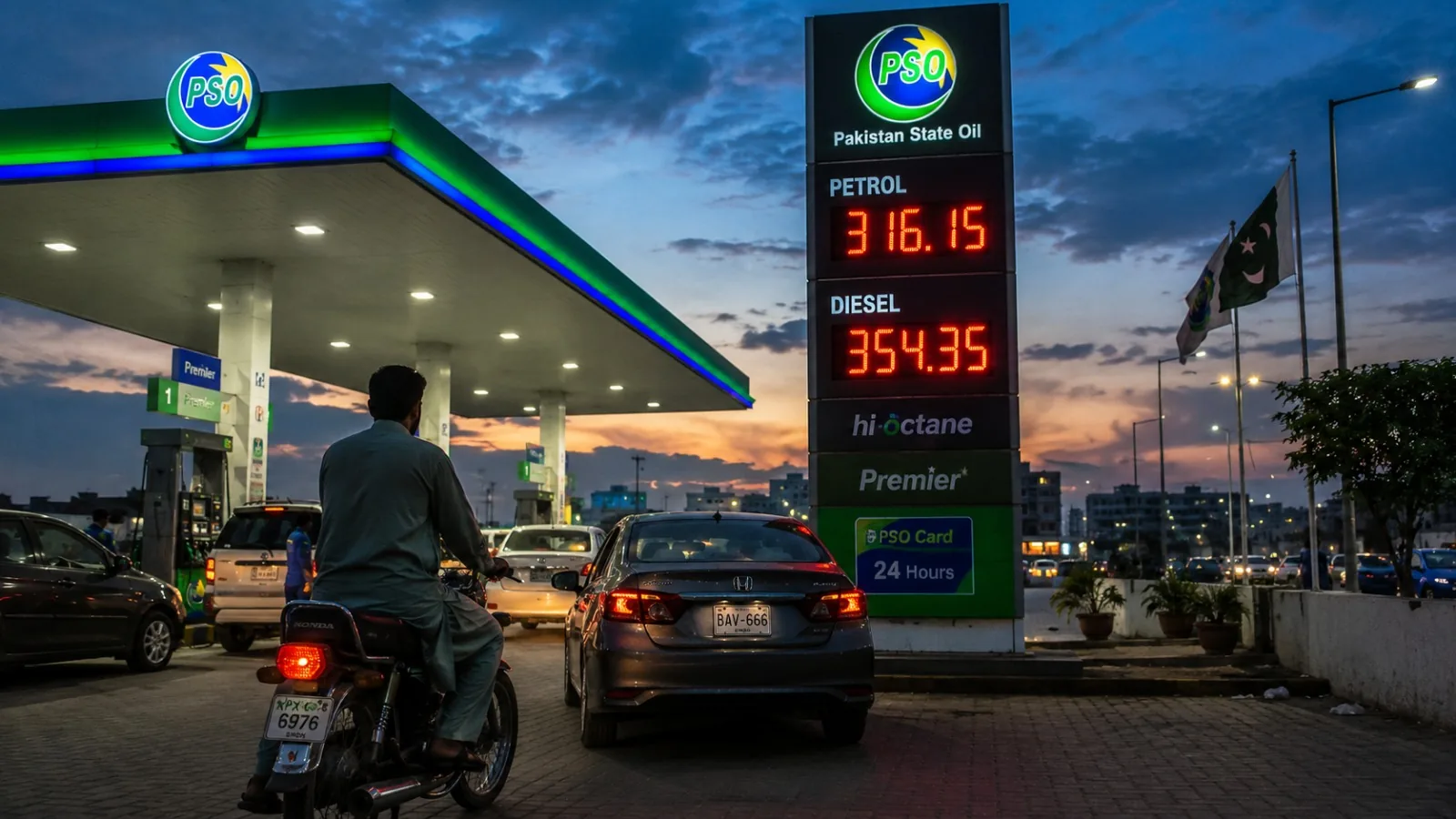
Why petrol price increased in Pakistan this week comes down to one root cause: renewed fighting between the United States and Iran has pushed global oil prices sharply higher. Pakistan imports roughly 90% of its energy needs, so it has nowhere to hide from that shock.
Petrol now costs Rs. 316.15 per litre and diesel Rs. 354.35, both up again as of July 18, 2026. The increase came just one day after the government held an emergency press conference to announce a major policy shift: fuel prices in Pakistan will now be revised daily instead of every one to two weeks.
This piece breaks down what officials actually said at that press conference, why OGRA is now in charge of daily pricing, how the Iran-US war is driving the numbers, and what it means for your next trip to the pump, part of Chokus‘s ongoing coverage of Pakistan’s economy and energy sector.
Quick Facts: Why Petrol Price Increased in Pakistan
This petrol price hike is already making headlines, and the timing makes it worse: fuel just got more expensive right as the government overhauled how prices are even set. Here’s the snapshot before the full breakdown of why petrol price increased in Pakistan and what changes next.
| Fact | Detail |
| Petrol price (July 18, 2026) | Rs. 316.15/litre (+Rs. 5.44) |
| Diesel price (July 18, 2026) | Rs. 354.35/litre (+Rs. 31.05) |
| Root cause | Renewed US-Iran conflict, oil market volatility |
| New pricing system | OGRA sets prices daily (was every 1-2 weeks) |
| Announced by | Petroleum Minister Ali Pervaiz Malik & Information Minister Attaullah Tarar |
| Announcement date | July 17, 2026, Islamabad press conference |
| International diesel price | Risen from $110 to $140 per barrel |
| Government relief so far | Rs. 130 billion+ in subsidies |
| War started | February 28, 2026 (US-Israel strikes on Iran) |
Why Did Petrol Price Increase in Pakistan This Week?
Petrol rose by Rs. 5.44 to Rs. 316.15 per litre, while diesel jumped Rs. 31.05 to Rs. 354.35 per litre, effective July 18 through July 20, 2026. Both increases followed a fresh escalation between the US and Iran that pushed Brent crude from around $70 a barrel in early July to $85 within two weeks, according to economist Farrukh Saleem.
Because Pakistan imports the vast majority of its fuel, any spike in global crude flows almost directly into local pump prices. In plain terms, the pakistan fuel price increase reason is external, not domestic. This is exactly why petrol price increased in Pakistan even though nothing changed domestically, since the shock came entirely from outside the country’s borders.
What Happened at the Petroleum Ministry’s Press Conference?
Federal Petroleum Minister Ali Pervaiz Malik and Information Minister Attaullah Tarar addressed reporters together in Islamabad on July 17, 2026, right before the latest price hike took effect. This petrol diesel price pakistan press conference was unusually detailed by Pakistani standards, going well beyond the usual one-line rate announcement.
What Did the Ministers Actually Announce?
Malik confirmed that Prime Minister Shehbaz Sharif and the federal cabinet had approved a new mechanism under which OGRA determines petrol and diesel prices every single day, based on the seven-day average of international Platts benchmark prices. He added that OGRA would publish not just the benchmark price but every component behind the final pump price, so the public can see exactly why rates move.
Why Did the Government Call This Decision ‘Painful’?
Malik described the shift bluntly in Urdu: prices would now change daily, and the decision was “definitely painful, but necessary to strengthen the state.” APP reported that international diesel prices had jumped from $110 to $140 a barrel and petrol was nearing $100, leaving little room to delay adjustments without straining state finances.
Tarar, for his part, warned that no hoarding or profiteering would be tolerated. He said recoveries had already been made from dealers caught overcharging.
What Is OGRA and Why Does It Matter Now?
The Oil and Gas Regulatory Authority (OGRA) is the government body created in 2002 to regulate Pakistan’s oil and gas sector, protect consumer interests, and foster competition in the petroleum industry. Until this year, OGRA only recommended price changes every one to two weeks, with final approval sitting elsewhere in government.
Under the new system, OGRA itself sets prices daily and publishes them directly on its website, without needing fresh cabinet approval each time. This ogra daily petrol pricing system replaces a mechanism that had barely changed in two decades, making it one of the most significant reforms to hit the sector in years. Officials describe this as a step toward deregulating Pakistan’s petroleum sector entirely, though OGRA still cannot control the international crude prices that actually drive the numbers.
How Is the Iran-US War Driving Fuel Prices in Pakistan?
The war traces back to February 28, 2026, when the US and Israel struck Iranian targets, prompting Iran to restrict shipping through the Strait of Hormuz, a critical route for global oil exports. Since strikes resumed in mid-July, Brent crude has climbed sharply, and Pakistan’s pakistan petrol price iran war connection has become impossible to ignore.
Within three weeks of the war’s initial outbreak, gasoline prices rose in 106 countries worldwide, with Pakistan recording a 24.4% jump even at that early stage. By April 2026, Pakistan’s petrol price had spiked 42.7% to a peak of Rs. 458.41 per litre before a partial government rollback. The connection is direct: when the Strait of Hormuz gets tense, Pakistani pump prices move within days.
How Much Has Petrol Price Risen Since the War Began?
This petrol price hike Pakistan news isn’t an isolated event. Prices have moved dramatically several times since the war began, as this Petrol Price Pakistan July 2026 timeline shows.
| Period | Petrol Price (Rs./litre) | Diesel Price (Rs./litre) |
| Late January 2026 (pre-war) | ~253-266 | ~257-280 |
| March 2026 | 321.17 | 335.86 |
| April 2026 (peak) | 458.41 | 520.35 |
| May 9, 2026 | 414.78 | 414.58 |
| July 11, 2026 | 310.71 | 323.30 |
| July 18, 2026 | 316.15 | 354.35 |
Prices have swung by well over 100 rupees per litre in just six months. That volatility is exactly why so many households and transporters have struggled to plan their monthly budgets around fuel costs this year.
What Does Daily Pricing Mean for Ordinary Pakistanis?
Under the daily fuel pricing mechanism Pakistan has now adopted, consumers should see smaller, more frequent price movements instead of large, sudden jumps every two weeks. Tarar specifically defended this shift, arguing that the old weekly system often meant people waited too long for relief when global prices fell.
Under the old rules, decreases would only reach the pump on the next scheduled review, sometimes weeks later.
The tradeoff is psychological as much as financial: prices could now change every single day, which may feel less predictable even if the total swings are smaller. For daily commuters and transport businesses, this makes checking the petrol price in Pakistan today a genuinely useful daily habit rather than a once-a-fortnight check.
Is Fuel Being Hoarded in Pakistan Right Now?
Yes. Regulators confirmed abnormally high fuel sales in early July 2026, well beyond normal consumption, and linked it to dealers stockpiling stock ahead of an expected price hike rather than selling it to the public. The government has since ordered a crackdown, though the underlying problem hasn’t fully gone away.
Why Are Fuel Stations Suddenly Closing in Some Cities?
Yes, at least according to regulators. Petroleum product sales rose well above normal consumption levels in the first half of July 2026. An advisory council linked this to dealers and distributors stockpiling fuel ahead of an expected price hike, rather than selling it to regular customers.
This directly caused fuel station closures and shortages in several cities, even though the country wasn’t technically short on supply.
What Is the Government Doing About It?
Tarar confirmed that the government had already recovered extra profits from some dealers. He said Prime Minister Shehbaz Sharif had directed the FIA, Intelligence Bureau, and other agencies to crack down on hoarding and profiteering in the oil sector.
Even so, whether enforcement keeps pace with the incentive to hoard during a volatile pricing period remains to be seen. For broader context on how these price swings are feeding into the cost of living nationwide, Chokus covers ongoing developments in its economy news section.
Final Word
Why petrol price increased in Pakistan this week isn’t really a mystery: a war 2,000 kilometers away is shaking global oil markets, and Pakistan, which imports nearly all its fuel, has nowhere to hide from that shock. The government’s shift to daily pricing won’t stop prices from rising when Brent crude spikes, but it should mean Pakistanis feel relief faster when prices eventually ease too.
Do you think daily price changes will actually help households plan better, or does constant fluctuation just add more stress? Share your thoughts in the comments.
Written by the Chokus.pk team. Last updated July 18, 2026, based on OGRA’s latest notification and the Petroleum Ministry’s July 17, 2026 press conference, the most recent official information available at the time of publishing.
Frequently Asked Questions
Why did petrol price increase in Pakistan this week?
Petrol rose to Rs. 316.15 per litre on July 18, 2026, because renewed US-Iran conflict pushed international oil prices higher, and Pakistan imports around 90% of its energy needs.
What is the petrol price in Pakistan today?
As of July 18, 2026, petrol costs Rs. 316.15 per litre, and the diesel price in Pakistan today stands at Rs. 354.35 per litre, according to the Petroleum Division’s official notification.
What did the government announce at the July 17 press conference?
Petroleum Minister Ali Pervaiz Malik and Information Minister Attaullah Tarar announced that OGRA will now set petrol and diesel prices daily instead of every one to two weeks, based on international oil market trends.
What is OGRA Pakistan and what does it do?
OGRA (Oil and Gas Regulatory Authority) is Pakistan’s government regulator for the oil and gas sector, established in 2002. It now determines and publishes petroleum prices daily under the new pricing mechanism.
How is the Iran-US war affecting petrol prices in Pakistan?
The war has disrupted shipping through the Strait of Hormuz and pushed Brent crude oil prices sharply higher, and since Pakistan imports most of its fuel, those international price jumps pass directly into local pump prices.
How much has petrol price risen in Pakistan since the war started?
Petrol has swung from around Rs. 253-266 per litre before the war to a peak of Rs. 458.41 in April 2026, before partially easing to Rs. 316.15 by mid-July 2026.
Is petrol being hoarded in Pakistan right now?
Regulators reported abnormally high fuel sales in early July 2026, which they linked to dealers hoarding stock ahead of expected price hikes, leading to station closures and shortages in several cities.
Will petrol prices in Pakistan go up again soon?
Economists have warned that further increases are possible if US-Iran tensions keep pushing Brent crude higher, though the new daily pricing system means any changes should now happen in smaller, more frequent steps.

Top 10 Best Swimming Pools for Kids in Karachi for Safe Family Fun
Fastest 4G Network in Pakistan: Which Network Comes Out on Top?