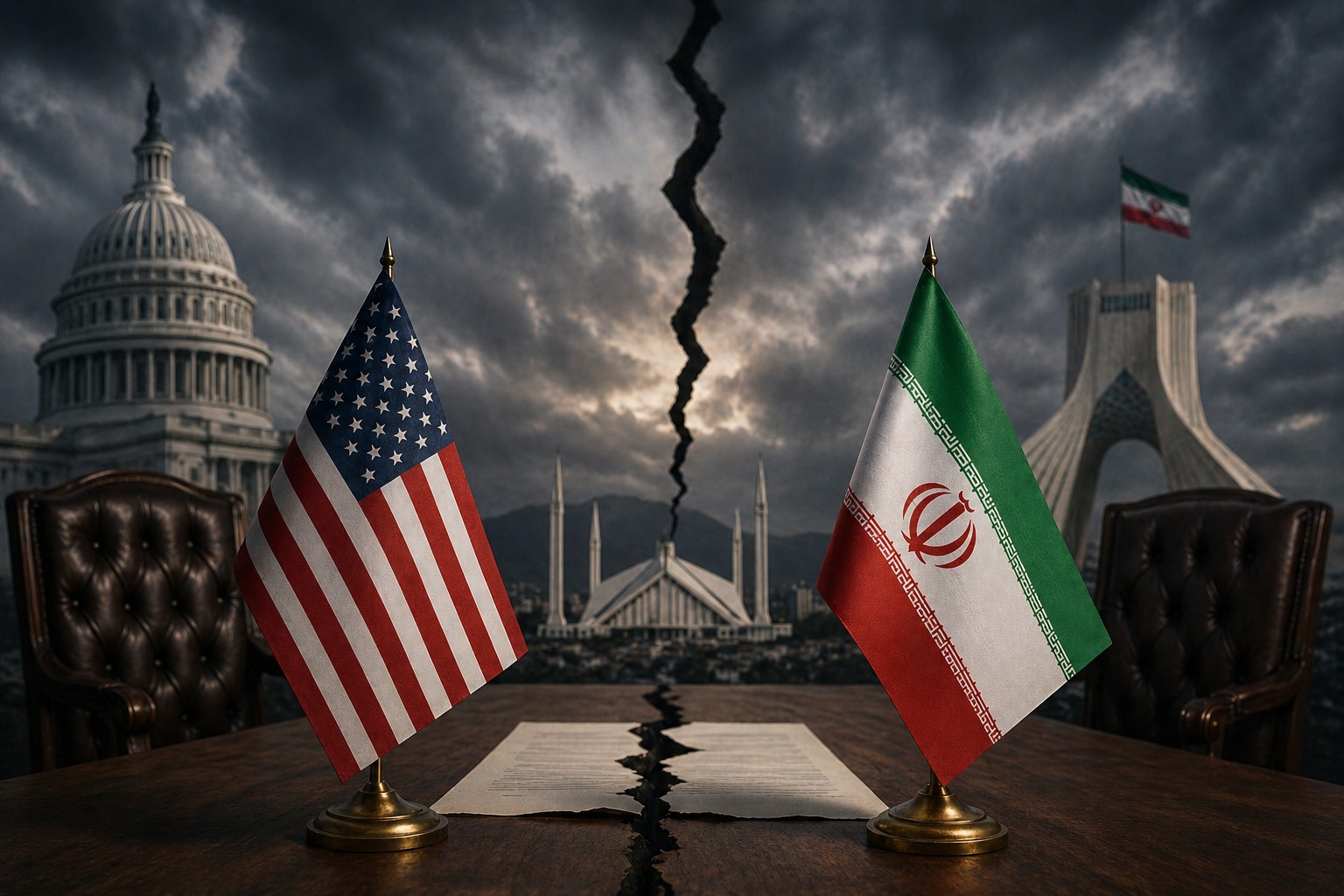
The much-anticipated diplomatic breakthrough between the United States and Iran has collapsed after high-level talks in Islamabad failed to produce any agreement. The situation escalated when Donald Trump canceled a planned visit by American envoys, while Abbas Araghchi left Pakistan without progress.
But what exactly went wrong and what does it mean for global politics?
Why Did the US-Iran Talks Fail?
The talks broke down due to deep disagreements over key issues:
- Nuclear Program: The US demanded strict limits on Iran’s uranium enrichment, while Iran refused to compromise.
- Sanctions & Blockade: Iran insisted on lifting US sanctions and naval restrictions first.
- Trust Deficit: Both sides accused each other of shifting demands and delaying progress.
In simple terms: neither side was willing to make the first major concession.
Why Did Trump Cancel the Islamabad Trip?
President Trump made it clear that he saw no value in continuing face-to-face talks:
- He called the trip a “waste of time” due to lack of progress.
- He insisted Iran should initiate contact instead.
- He also pointed to internal divisions within Iran’s leadership.
This decision effectively ended hopes for an immediate diplomatic breakthrough.
What Role Did Pakistan Play?
Pakistan acted as a key mediator in the Islamabad talks, trying to bridge the gap between Washington and Tehran. However:
- Iran avoided direct talks with the US.
- The US delegation never arrived after the cancellation.
- Diplomatic momentum stalled despite Pakistan’s efforts.
What Happens Next?
Is War Still Avoidable?
Yes but tensions remain extremely high. Both sides have avoided full-scale conflict so far, but no clear path to peace exists.
Will Talks Resume?
Possibly. Indirect negotiations via countries like Pakistan or Oman may continue, but no official timeline has been announced.
Why Does This Matter Globally?
The collapse impacts:
- Oil prices due to tensions in the Strait of Hormuz
- Regional stability in the Middle East
- Global markets and inflation
Final Thoughts
The collapse of US-Iran talks in Islamabad highlights a harsh reality: diplomacy is fragile when trust is low and demands are high. With Trump refusing direct engagement and Iran standing firm, the world now watches closely waiting to see whether diplomacy returns or tensions escalate further.