
Starlink in Pakistan: Launch Date, Price, and License Status (2026)

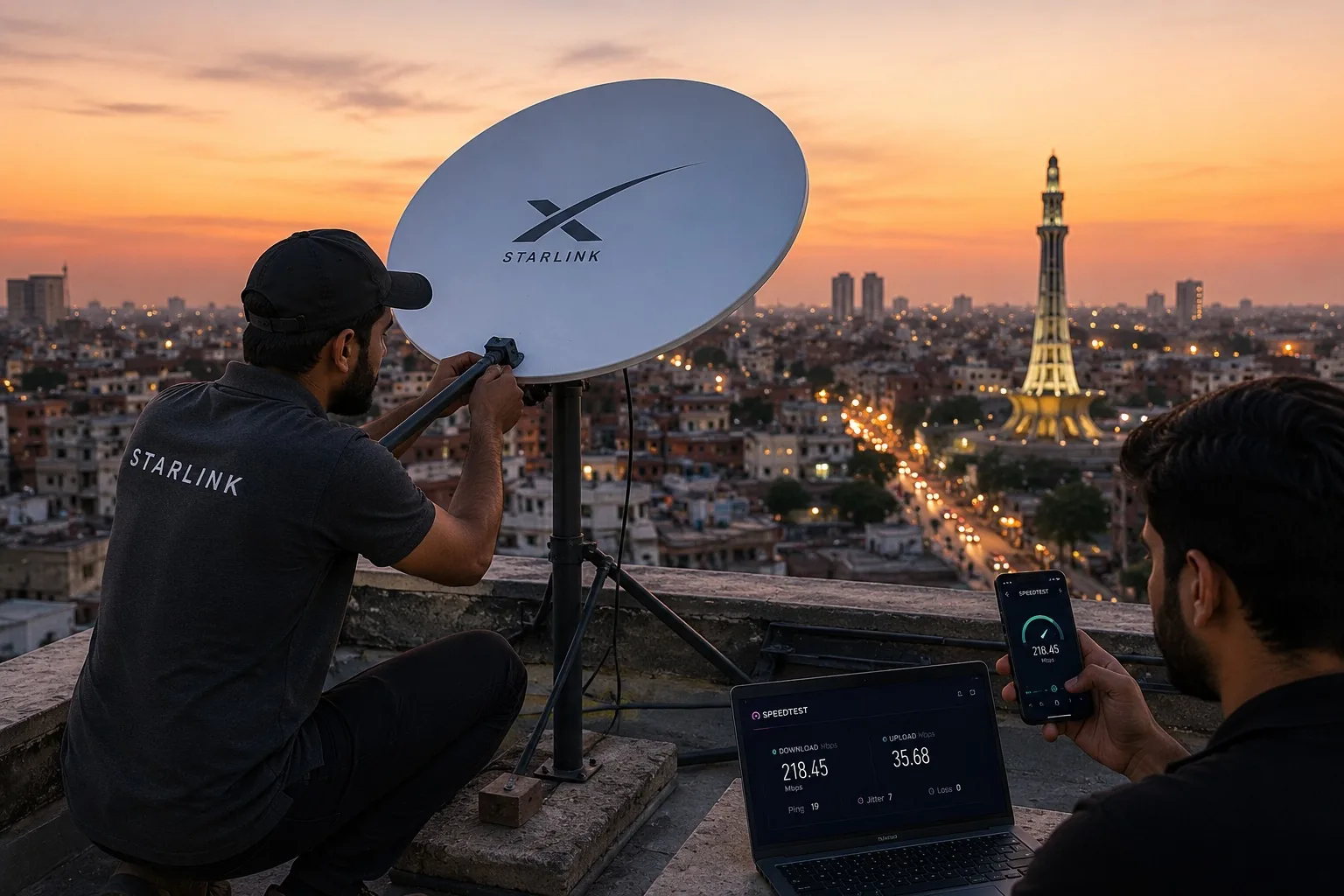
Starlink in Pakistan is no longer a question of “if,” it’s a question of “when.” After a four-year licensing process that included a temporary suspension over security concerns earlier this year, Elon Musk’s satellite internet service has cleared most of its regulatory hurdles, and Pakistan’s telecom regulator is now actively pushing to get it live. Here’s exactly where the Starlink launch date Pakistan timeline stands: the license status, expected pricing, coverage, and what it means for students, freelancers, and rural households still stuck on weak signals.
In short, Starlink does not have a commercial license in Pakistan yet, though the regulatory framework needed to grant one was approved in April 2026. PTA is actively pushing the government to finalize licensing, and industry estimates point to a possible launch by late 2026, at an estimated Rs. 35,000 per month for residential users.
Quick Facts: Starlink in Pakistan at a Glance
Starlink still hasn’t launched commercially in Pakistan, but the regulatory path is now largely clear after years of delay. Here’s the current snapshot before the full breakdown below.
| Fact | Detail |
| Commercial launch | Not yet live; regulatory approvals mostly complete |
| Regulator | Pakistan Telecommunication Authority (PTA) |
| Licensing framework | Fixed Satellite Services (FSS), approved April 2026 |
| License fee | $500,000 (reduced from $640,000) |
| License validity | 15 years |
| Rollout requirement | Service must launch within 18 months of licensing |
| Expected residential price | Around Rs. 35,000/month + Rs. 110,000 setup |
| Competing applicants | OneWeb, Amazon Kuiper, Shanghai Spacecom, Telesat |
| Latest update | PTA urged the government to expedite licensing (July 16, 2026) |
What Is Starlink and Why Does It Matter for Pakistan?
Starlink is SpaceX’s satellite internet network, built on thousands of Low Earth Orbit (LEO) satellites that beam internet directly to a small dish at home. There’s no fiber line, no telephone exchange, and no local tower required. Because the satellites sit much closer to Earth than traditional communication satellites, Starlink can deliver speeds and latency that feel closer to broadband than to old-style satellite internet.
For a country where broadband still hasn’t reached large parts of Balochistan, interior Sindh, northern KPK, and rural Punjab, this matters. Instead of laying expensive fiber across difficult terrain, satellite internet can, in theory, light up connectivity almost anywhere with a clear view of the sky.
Starlink in Pakistan: What Is the Current Launch Status?
Starlink first registered with the Securities and Exchange Commission of Pakistan (SECP) in 2022 and applied for a telecom license soon after. It received a temporary No Objection Certificate (NOC) in March 2025, allowing preliminary work to begin. Progress since then has moved in fits and starts rather than one clean announcement.
Why Did Pakistan Pause Starlink’s License in Early 2026?
In February 2026, the government halted Starlink’s license approval, citing concerns over data security, surveillance, and geopolitical factors. Officials worried the service could bypass Pakistan’s existing monitoring and security checkpoints. This wasn’t a rejection, though; it sent the case back to the Pakistan Space Activities Regulatory Board (PSARB) for further review rather than shutting the process down entirely.
What Does the New FSS Framework Actually Require?
By mid-April 2026, PTA had finalized a new Fixed Satellite Services framework and secured Federal Cabinet approval, a major breakthrough after the earlier pause. This single framework now governs all satellite internet Pakistan applications, not just Starlink’s. Under the PTA’s own draft license terms, satellite operators, including Starlink, OneWeb, Amazon’s Project Kuiper, Shanghai Spacecom, and Telesat, need only one license instead of two, the fee dropped from $640,000 to $500,000, and licenses are valid for 15 years. Companies must roll out service, including at least one Gateway Earth Station inside Pakistan, within 18 months of licensing.
Has PTA Actually Issued Any Licenses Yet?
Even with the framework approved, actual licenses hadn’t been issued as of mid-2026. As recently as July 16, 2026, PTA Chairman Major General (R) Hafeez Ur Rehman told a Senate committee that the regulator had completed its groundwork and forwarded recommendations to the Ministry of IT, urging the government to move faster on Starlink in Pakistan and pointing to Nepal as a country that had already licensed satellite internet successfully. Industry estimates now point toward a commercial launch by late 2026, though this timeline has already shifted multiple times and could move again.
How Much Will Starlink Cost in Pakistan?
Official pricing hasn’t been confirmed, since Starlink still doesn’t have a commercial license in Pakistan. Based on Starlink’s pricing structure in comparable markets and figures reported consistently across Pakistani tech outlets, here’s what the expected Starlink packages Pakistan could offer look like.
What Are the Expected Starlink Pakistan Price Tiers?
| Plan Type | Estimated Monthly Price | Estimated Setup/Equipment Cost |
| Residential (Standard) | Around Rs. 35,000 | Around Rs. 110,000 |
| Mobility/Priority | Around Rs. 50,000 | Around Rs. 120,000 |
| Business/Enterprise | Around Rs. 95,000 | Around Rs. 220,000 |
These figures are estimates only, and they’re almost certainly too high for the average household budget in Pakistan right now.
Will Starlink Prices Drop in Pakistan Over Time?
Starlink’s prices have dropped over time in every market it has entered, as competition increased and local costs adjusted. With Shanghai Spacecom, OneWeb, and Amazon Kuiper all seeking licenses under the same FSS framework, competition could push prices down faster than in markets where Starlink launched alone.
Who Actually Needs Starlink in Pakistan?
Starlink won’t replace a solid PTCL or fiber connection already working well in Karachi, Lahore, or Islamabad. Where it genuinely matters:
- Rural and remote areas with no fiber or weak cellular coverage
- Freelancers and remote workers in underserved towns who currently rely on unstable mobile data
- Businesses and farms in areas where laying cable isn’t economical
- Backup connectivity during floods, monsoon disruptions, or fiber cuts, a real recurring problem in parts of Pakistan
- Educational institutions in areas where students currently have no reliable way to attend online classes
If you’re in a major city with decent fiber already, Starlink’s high setup cost may be hard to justify, at least at launch pricing.
What Challenges Remain Before Starlink Goes Live?
What Regulatory and Technical Hurdles Are Left?
A few real hurdles remain before Pakistanis can order a dish:
- Actual license issuance: The FSS framework exists, but as of mid-2026, no company had received a final operating license, only the regulatory path to get one.
- Security and surveillance concerns: The same worries that triggered February 2026’s pause haven’t fully disappeared and could resurface during final approval.
- Gateway Earth Station requirement: Starlink must build physical ground infrastructure inside Pakistan within 18 months of licensing, which takes time and coordination.
- Pricing affordability: At current estimated rates, adoption may be limited to businesses and higher-income households initially.
Is Starlink Already Being Used Informally in Pakistan?
A Pakistani senator raised concerns in the Senate that Starlink might already be operating informally in parts of Balochistan without authorization, a claim the IT Ministry’s Secretary disputed. Either way, it shows how closely satellite internet is being watched even before a formal launch.
How Does Starlink Compare to Traditional Broadband in Pakistan?
| Factor | Starlink | Fiber/DSL Broadband |
| Coverage | Anywhere with a clear sky view | Only where cables are laid |
| Setup cost | High (equipment-based) | Low to moderate |
| Speed consistency | Weather-dependent | Generally stable |
| Best for | Rural, remote, backup use | Urban households with existing infrastructure |
| Availability in Pakistan | Not yet commercially launched | Widely available |
Starlink’s entry would land at the same time Pakistan’s mobile networks are consolidating, most notably the Telenor-Ufone merger, which is reshaping who controls spectrum and infrastructure in the country. Two very different kinds of telecom shakeups, happening in the same window, are worth watching together.
Final Word
Starlink in Pakistan has moved from “will it ever happen” to “when exactly will it happen,” a meaningful shift after years of regulatory limbo, a security-related pause, and now an approved licensing framework. The realistic expectation is a late-2026 commercial rollout, with pricing likely to start on the expensive side before competition and local adoption bring costs down.
Would you actually switch to Starlink if it launched in your area at today’s estimated pricing, or does the cost make it a hard sell? Share your take in the comments.
Written by the Chokus.pk team. Last updated July 17, 2026, based on PTA Chairman Hafeez Ur Rehman’s July 16, 2026 Senate committee remarks, the most recent official update on Starlink’s licensing status.
More from Chokus: Telecom coverage
FAQs About Starlink in Pakistan
Has Starlink officially launched in Pakistan?
No. As of mid-2026, Starlink has cleared the regulatory framework needed to apply, but no company, including Starlink, has received a final commercial operating license from the PTA.
When will Starlink be available in Pakistan?
Industry estimates suggest a possible commercial launch by late 2026, though the timeline has already shifted multiple times, including a temporary halt in February 2026, and could change again.
How much will Starlink cost in Pakistan?
Official pricing isn’t confirmed yet. Based on comparable markets, residential plans are estimated at around Rs. 35,000/month plus a Rs. 110,000 setup cost, though these figures may change before launch.
Why did Pakistan pause Starlink’s license in 2026?
In February 2026, the government paused the approval process over data security and surveillance concerns, sending the case back for further regulatory review rather than rejecting it outright.
Is Starlink better than PTCL or fiber internet?
Not necessarily. Starlink is most valuable in areas without existing fiber or cable coverage. If reliable fiber broadband already exists in your area, traditional providers will likely remain cheaper and more practical.
Who is regulating Starlink’s entry into Pakistan?
The PTA handles telecom licensing, while the Pakistan Space Activities Regulatory Board (PSARB) oversees satellite-specific approvals under the Fixed Satellite Services framework approved in April 2026.
Which other companies are trying to enter Pakistan alongside Starlink?
OneWeb, Amazon’s Project Kuiper, Shanghai Spacecom, and Telesat have all applied under the same FSS licensing framework, meaning Starlink won’t be the only satellite internet option for long.
What does Starlink’s license actually require once approved?
Under the FSS framework, a PTA Starlink license requires a $500,000 fee for 15-year validity and a rollout, including a Gateway Earth Station inside Pakistan, within 18 months of approval.

Top 10 Best Swimming Pools for Kids in Karachi for Safe Family Fun
Fastest 4G Network in Pakistan: Which Network Comes Out on Top?