
EU Foreign Policy Chief Kaja Kallas to Visit Pakistan Today on 1st June 2026

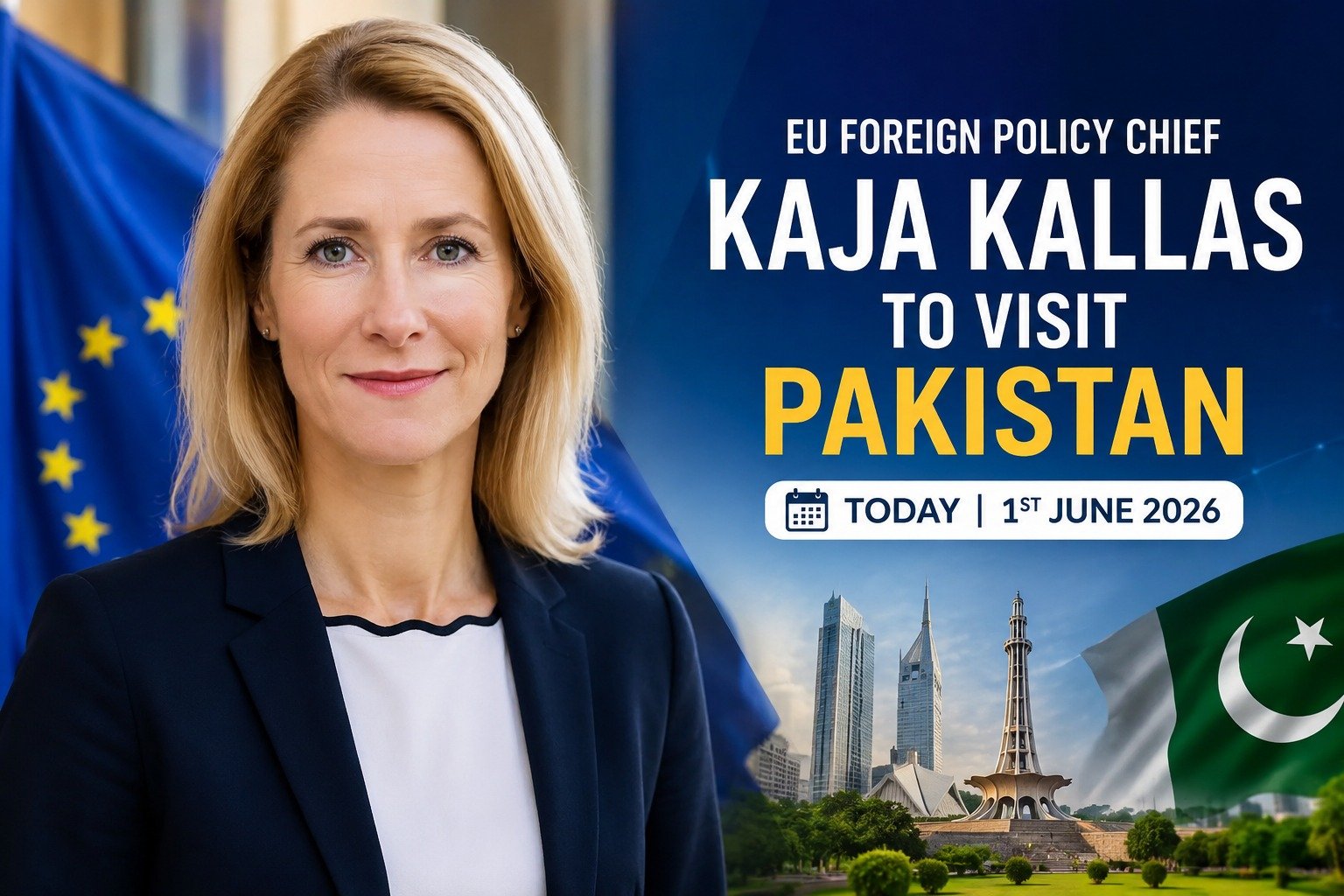
The visit of EU Foreign Policy Chief Kaja Kallas to Pakistan on 1st June 2026 marks an important development in the diplomatic relationship between Pakistan and the European Union. As global politics continues to evolve, high level engagements between nations and international organizations have become increasingly significant. Kaja Kallas, who serves as the European Union’s top foreign policy representative, is expected to hold discussions with Pakistani leadership on a range of issues including regional security, economic cooperation, trade relations, climate action, and international diplomacy.
This visit comes at a time when Pakistan is seeking to strengthen its global partnerships, attract foreign investment, and expand trade opportunities. For the European Union, engagement with Pakistan reflects the bloc’s broader strategic interests in South Asia. The visit is expected to reinforce cooperation and open new avenues for collaboration between the two sides.
Why Kaja Kallas’ Visit Matters
Diplomatic visits at this level are rarely symbolic. They often represent a commitment to deeper engagement and a shared interest in addressing common challenges. Kaja Kallas’ visit to Islamabad highlights the growing importance of Pakistan within the European Union’s foreign policy framework.
Pakistan occupies a strategically important location connecting South Asia, Central Asia, and the Middle East. This geographical position gives the country a crucial role in regional connectivity, trade routes, and security matters. The European Union recognizes Pakistan’s importance in maintaining regional stability and fostering economic growth.
The visit also signals the EU’s willingness to expand cooperation beyond traditional diplomatic channels and focus on long term partnerships.
Pakistan and the European Union: A Growing Partnership
Relations between Pakistan and the European Union have evolved significantly over the past two decades. The European Union remains one of Pakistan’s largest trading partners and an important source of development assistance.
Trade between the two sides has expanded steadily, benefiting businesses, exporters, and consumers. The European market provides Pakistani products with access to millions of customers across member states.
At the same time, cooperation has extended into areas such as education, climate resilience, governance reforms, human rights, and sustainable development. Kaja Kallas’ visit offers an opportunity to review these achievements and identify new areas for collaboration.
Trade and Economic Cooperation Take Center Stage
One of the key topics expected to dominate discussions during the visit is economic cooperation. Pakistan is currently focused on improving its economic outlook through investment, industrial growth, and export expansion.
The European Union plays a vital role in supporting these objectives through trade partnerships and market access opportunities. Pakistani exports including textiles, garments, leather products, sports equipment, and surgical instruments have benefited from strong demand across European markets.
Business leaders and economic analysts will closely watch the outcomes of this visit for signs of increased investment cooperation, technology transfer, and enhanced market access.
A stronger economic relationship can help create jobs, encourage innovation, and improve competitiveness within Pakistan’s economy.
The Importance of GSP Plus for Pakistan
The Generalised Scheme of Preferences Plus, commonly known as GSP Plus, remains one of the most significant aspects of Pakistan’s relationship with the European Union.
This arrangement grants eligible countries preferential access to European markets. For Pakistan, GSP Plus has contributed substantially to export growth and industrial development.
The continuation of these benefits remains important for many sectors of Pakistan’s economy. Discussions surrounding trade, compliance standards, and future cooperation are expected to be part of broader conversations during Kaja Kallas’ visit.
For exporters and manufacturers, maintaining strong ties with the European Union is essential for sustaining growth in an increasingly competitive global marketplace.
Regional Security and Strategic Dialogue
Security issues are also likely to feature prominently in discussions between European and Pakistani officials. South Asia continues to face a range of geopolitical challenges that require cooperation among international partners.
Pakistan’s role in promoting regional stability makes it an important stakeholder in conversations concerning peace, security, and economic connectivity.
The European Union has consistently supported diplomatic solutions to regional conflicts and values partnerships that contribute to long term stability. Through strategic dialogue, both sides can exchange perspectives on emerging challenges and identify opportunities for cooperation.
This engagement is particularly important in a world where security concerns increasingly cross national borders and require collective responses.
Climate Change and Sustainable Development
Climate change has become one of the defining challenges of the modern era. Pakistan remains among the countries most vulnerable to extreme weather events despite contributing only a small share of global emissions.
The European Union has positioned itself as a global leader in climate action and environmental sustainability. As a result, climate cooperation is expected to be a major area of discussion during Kaja Kallas’ visit.
Potential areas of collaboration include renewable energy, green financing, disaster preparedness, sustainable agriculture, and environmental protection.
Strengthening cooperation in these sectors can help Pakistan build resilience while supporting economic growth and environmental sustainability.
Opportunities for Investment and Innovation
Pakistan’s growing population, expanding digital economy, and strategic location present significant opportunities for international investors.
European companies have shown increasing interest in sectors such as information technology, renewable energy, telecommunications, manufacturing, and infrastructure development.
Kaja Kallas’ visit could help strengthen investor confidence by highlighting Pakistan’s commitment to economic reforms and international engagement.
Enhanced business cooperation can support innovation, create employment opportunities, and encourage knowledge sharing between Pakistani and European institutions.
For startups and entrepreneurs, stronger Pakistan EU relations may also create new opportunities for partnerships, funding, and access to international markets.
Challenges That Remain
Despite the positive momentum in relations, several challenges continue to require attention. Economic reforms, governance improvements, regulatory consistency, and investment facilitation remain important priorities for Pakistan.
Similarly, the European Union continues to emphasize transparency, sustainability, and compliance with international commitments as part of its external partnerships.
Addressing these issues through constructive dialogue can help strengthen trust and create a more stable foundation for future cooperation.
The success of the relationship will depend on both sides maintaining open communication and working toward shared goals.
Conclusion
The visit of EU Foreign Policy Chief Kaja Kallas to Pakistan on 1st June 2026 represents an important moment in the evolving relationship between Pakistan and the European Union. Beyond diplomatic engagement, the visit reflects growing cooperation in trade, investment, security, climate action, and regional stability.
As Pakistan continues to strengthen its international partnerships and pursue economic growth, engagement with the European Union remains strategically important. Discussions held during this visit could shape the future direction of Pakistan EU relations and contribute to deeper cooperation across multiple sectors.
For policymakers, businesses, and citizens alike, Kaja Kallas’ visit serves as a reminder that diplomacy and international collaboration remain essential tools for addressing modern challenges and creating new opportunities in an increasingly interconnected world.

Top 10 Best Swimming Pools for Kids in Karachi for Safe Family Fun
Fastest 4G Network in Pakistan: Which Network Comes Out on Top?