
Monsoon 2026 Pakistan: Start Date, City Forecast & Flood Alert

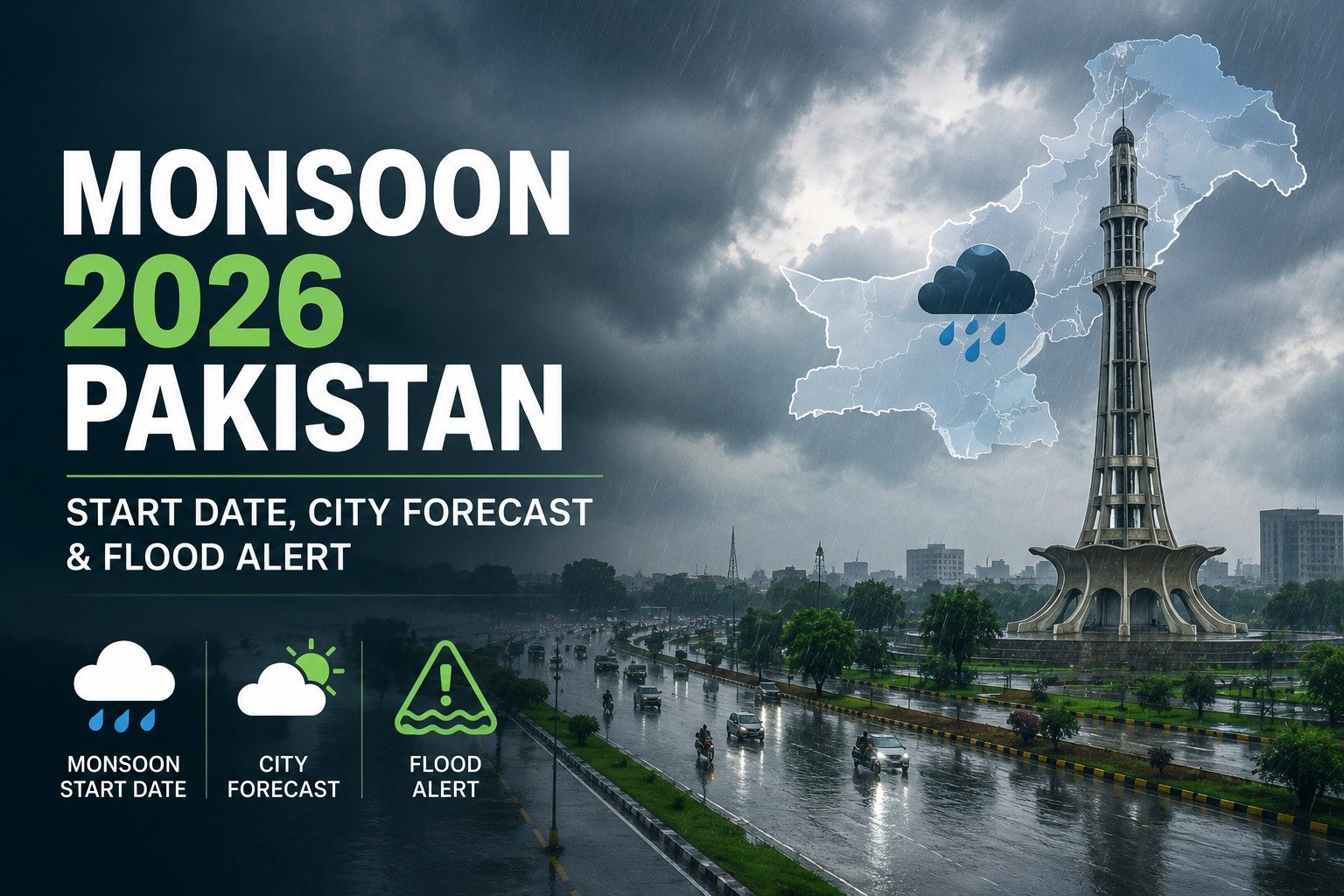
It is officially here. Pakistan’s monsoon season 2026 entered the country on July 1, starting from northeastern Punjab and Azad Kashmir, exactly as the Pakistan Meteorological Department forecast. If you are waiting for rain in your city or trying to figure out whether to worry about flooding this year, this guide breaks it all down, city by city, using the latest PMD data.
Monsoon 2026 Pakistan Start Date – City by City Forecast
| City | Expected Monsoon Arrival | Rainfall Outlook |
| Islamabad | July 1 onward | Heavy spells, urban flooding risk July 1 to 4 |
| Rawalpindi | July 1 onward | Heavy rain, flash flood alert |
| Lahore | July 1 to 2 | Significant rainfall and windstorms are expected |
| Peshawar | July 1 to 5 | Thunderstorms across KPK districts |
| Faisalabad | July 1 to 4 | Urban flooding risk |
| Multan | July 2 onward | Moderate to heavy spells |
| Quetta | Mid July onward | Below normal rainfall expected |
| Karachi | July 5 or later | Below normal, delayed arrival |
| Muzaffarabad (AJK) | July 1 onward | Heavy rain, landslide risk |
| Gilgit Baltistan | July 1 onward | Flash flood risk in mountain regions |
What the Pakistan Meteorological Department Says About Monsoon 2026
According to the Pakistan Meteorological Department, the 2026 monsoon season officially spans July through September. The first system entered Pakistan through northeastern Punjab and Kashmir on July 1, driven by moisture currents from both the Arabian Sea and the Bay of Bengal.
PMD spokesperson Anjum Nazir confirmed that rainfall will initially concentrate in the northern and northeastern parts of the country. Furthermore, a westerly wave entering Pakistan’s upper regions on the night of June 30 is pushing widespread rain, windstorms, and thundershowers across multiple provinces simultaneously.
PMD Monsoon 2026 Alert Summary
| Region | PMD Alert | Period |
| Kashmir and AJK | Heavy rain, isolated heavy falls | July 1 to 6 |
| Khyber Pakhtunkhwa | Thundershowers — Dir, Swat, Peshawar, Kohat, Bannu | July 1 to 5 |
| Punjab (Northern and Central) | Widespread rain, windstorms | July 1 to 4 |
| Islamabad and Rawalpindi | Urban flooding risk | July 1 to 4 |
| Sindh including Karachi | No significant rain until July 5 or later | Delayed |
| Balochistan | Below normal season expected | Throughout |
Monsoon 2026 Pakistan Rainfall Outlook – Below Normal or Heavy?
This is where the picture gets complicated. Overall, PMD has forecast below normal rainfall for Pakistan during the 2026 monsoon season. However, “below normal overall” does not mean safe. Weather experts warn that some areas could still receive intense, concentrated downpours where a single day’s rainfall equals an entire month’s average, which dramatically increases urban flooding risk.
The Indian Ocean Dipole, currently transitioning toward a positive phase, may bring slightly above normal rainfall to some parts of Pakistan later in the season, particularly during August and September. Consequently, the risk is not evenly spread across all months. July may feel manageable in many cities, but August could bring stronger spells depending on how the IOD develops.
Will Karachi Get Monsoon Rain in 2026?
Karachi residents will need to wait longer than the rest of the country. Sindh remains outside the path of the initial monsoon system, and PMD has confirmed no significant rainfall in the province until at least July 5. Moreover, Karachi and the rest of Sindh are forecast to receive below normal rainfall throughout the entire 2026 monsoon season.
A low pressure system developing over the Bay of Bengal could eventually trigger rain in the city, but weather experts caution against expecting the kind of heavy monsoon spells that other major cities will experience in early July. For now, the heat in Karachi continues, and meaningful relief remains a few weeks away at minimum.
Urban Flooding Risk in Pakistan Monsoon 2026
PMD has specifically flagged five major cities for urban flooding risk during the first spell: Islamabad, Rawalpindi, Peshawar, Lahore, and Faisalabad. Heavy rains are expected to overwhelm drainage systems in these cities between July 1 and July 4, which means road closures, waterlogging, and traffic disruptions are likely.
Tourists and travelers heading toward northern areas should exercise extra caution during this period. Similarly, residents near low lying areas or seasonal waterways in these cities should take precautionary measures before the heavy spells arrive. If you were planning a beach trip to Karachi this month, check our Sea View Beach Karachi guide first – monsoon swells make swimming significantly more dangerous than usual.
How to Prepare for Monsoon 2026 in Pakistan
A few practical steps before the heaviest spells hit:
- Store clean drinking water since the water supply can get contaminated during heavy urban flooding
- Keep emergency contacts saved, including PDMA helplines for your province
- Avoid driving through flooded streets, even if the water looks shallow
- Move important documents and valuables to higher shelves at home
- Check roof drainage before the main season starts to avoid ceiling leaks
- Farmers should adjust crop activities and secure livestock, as PDMA has specifically advised alongside PMD warnings
Which city are you in and how is the monsoon treating you so far? Drop a comment below – we will keep updating this guide as the season progresses.
Last updated July 1, 2026, by the Chokus.pk desk, based on official Pakistan Meteorological Department forecasts and PDMA advisories.
Frequently Asked Questions
When did monsoon 2026 start in Pakistan?
Pakistan’s monsoon 2026 officially began on July 1, 2026, entering through northeastern Punjab and Azad Kashmir as forecast by the Pakistan Meteorological Department.
Which cities will get the most rain in the monsoon of 2026?
Islamabad, Rawalpindi, Lahore, Peshawar, and Faisalabad are forecast to receive the heaviest early spells, with urban flooding alerts issued for July 1 to 4.
Will Karachi get monsoon rain in 2026?
Karachi is expected to receive below normal rainfall this season. No significant rain is forecast until at least July 5, and the overall Sindh outlook remains below normal throughout the season.
Is monsoon 2026 dangerous in Pakistan?
While overall rainfall is forecast below normal, PMD has warned of isolated heavy downpours that could cause urban flooding and flash floods in mountain regions. Islamabad, Rawalpindi, and northern areas face the highest risk in early July.
When does monsoon 2026 end in Pakistan?
Pakistan’s monsoon season typically runs through September. Rainfall gradually decreases toward late September, though late season spells can still bring significant rain to Punjab and KPK.
What is PMD’s overall monsoon 2026 forecast for Pakistan?
PMD forecasts below normal overall rainfall for the July to September 2026 season, though isolated heavy spells remain likely in northern regions and could trigger flash floods and urban flooding in major cities.

Top 10 Best Swimming Pools for Kids in Karachi for Safe Family Fun

Fastest 4G Network in Pakistan: Which Network Comes Out on Top?