
Cloud Phones Could Revolutionize Mobile Communication in Pakistan

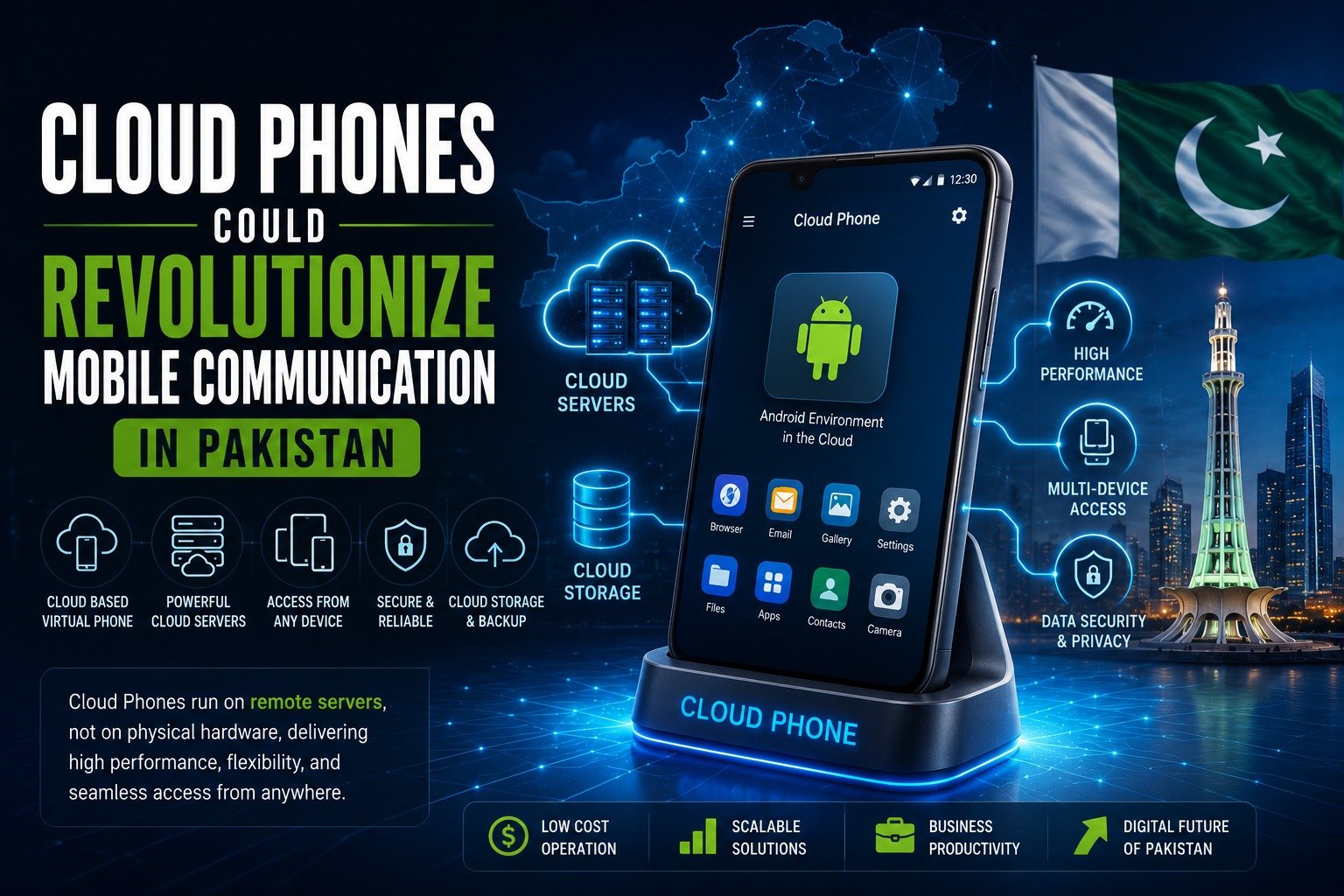
Pakistan’s technology sector continues to evolve at a remarkable pace, with innovations reshaping how people connect, communicate, and access digital services. Among the latest developments attracting attention is the introduction of cloud phones, a technology with the potential to transform mobile communication nationwide.
As smartphone adoption continues to grow and internet connectivity improves, cloud-based mobile solutions are emerging as a practical alternative for users seeking enhanced performance, flexibility, and digital accessibility. Cloud phones represent a shift from traditional device-dependent computing toward a model where processing power and applications are hosted remotely.
For Pakistan, where digital transformation remains a national priority, cloud phones could play an important role in expanding access to technology, improving user experiences, and supporting the country’s growing digital economy.
What Are Cloud Phones?
Cloud phones are mobile devices or virtual mobile environments that rely on cloud computing infrastructure rather than solely depending on the hardware inside a physical smartphone.
Unlike conventional smartphones, cloud phones can perform demanding tasks through remote servers. Applications, storage, processing power, and computing resources are managed in the cloud, allowing users to access powerful capabilities without requiring expensive hardware.
This approach offers several advantages, including improved performance, greater scalability, enhanced security, and reduced dependence on high-end mobile devices.
As cloud technology continues to advance globally, cloud phones are becoming increasingly attractive for consumers, businesses, and technology providers.
Why Cloud Phones Matter for Pakistan
Pakistan is experiencing rapid digital growth driven by increasing smartphone usage, expanding broadband coverage, and rising demand for online services.
However, many consumers still face challenges related to device affordability, storage limitations, and hardware performance. Cloud phones can address these issues by allowing users to access advanced computing resources through the internet.
This means individuals may no longer need the latest flagship smartphones to enjoy powerful applications and digital services.
For students, professionals, entrepreneurs, and businesses, cloud phones could significantly improve productivity while reducing technology costs.
The introduction of cloud phones also aligns with Pakistan’s broader vision of digital inclusion and technology-driven economic development.
Expanding Access to Advanced Technology
One of the most significant benefits of cloud phones is their ability to democratize access to advanced technology.
Many high-performance applications require powerful processors, large storage capacity, and substantial memory capacity. These requirements often make premium devices expensive and inaccessible for many users.
Cloud phones can help bridge this gap by moving resource-intensive tasks to remote servers. Users can access sophisticated applications and services even on relatively modest devices.
This approach creates opportunities for a wider segment of the population to benefit from modern digital tools without facing major financial barriers.
For developing economies like Pakistan, such accessibility could have a transformative impact on digital adoption.
Supporting Pakistan’s Growing Digital Economy
Pakistan’s digital economy has expanded rapidly in recent years. The growth of e-commerce, online banking, digital payments, remote work, and technology startups has increased demand for reliable digital infrastructure.
Cloud phones can contribute to this ecosystem by providing more efficient access to digital services and applications.
Businesses can leverage cloud-based mobile environments to streamline operations, improve communication, and support remote teams. Entrepreneurs and startups can access advanced technology without investing heavily in expensive hardware.
As digital services become increasingly central to economic activity, cloud phones may emerge as an important component of Pakistan’s technology landscape.
Improving Mobile Performance and User Experience
One of the primary reasons consumers upgrade smartphones is to gain better performance.
Cloud phones challenge this traditional model by allowing users to access computing power from remote cloud servers. This can reduce the burden on local device hardware while delivering smoother experiences for demanding applications.
Users may benefit from:
- Faster application performance
- Increased storage capacity
- Better multitasking capabilities
- Improved data synchronization
- Enhanced accessibility across devices
These improvements can create a more efficient and seamless mobile experience, particularly for users who rely heavily on digital services throughout the day.
Opportunities for Businesses and Enterprises
The adoption of cloud phones extends beyond individual consumers.
Businesses increasingly require secure, scalable, and flexible communication solutions. Cloud-based mobile technology offers organizations the ability to manage devices, applications, and data more efficiently.
Companies can provide employees with secure access to business resources without relying entirely on physical hardware.
Cloud phones also support remote work environments by enabling seamless access to applications and data from virtually any location with internet connectivity.
As Pakistani businesses continue their digital transformation journeys, cloud-based mobile solutions could become an important strategic asset.
Strengthening Cybersecurity and Data Protection
Security remains a major concern for both consumers and organizations.
Traditional smartphones often store sensitive information directly on devices, creating risks if devices are lost, stolen, or compromised.
Cloud phones offer potential security advantages by centralizing data management and reducing reliance on local storage. Organizations can implement stronger security controls, monitor access, and manage sensitive information more effectively.
While no technology is entirely immune to cyber threats, cloud-based systems can provide additional layers of protection when implemented correctly.
For businesses handling confidential information, this security advantage may prove especially valuable.
Challenges Facing Cloud Phone Adoption
Despite their potential, cloud phones also face challenges that must be addressed.
Reliable internet connectivity is essential for delivering a smooth cloud phone experience. Areas with limited network coverage or slower internet speeds may encounter performance limitations.
Consumer awareness also remains an important factor. Many users are unfamiliar with cloud-based mobile technology and may require education regarding its benefits and practical applications.
Additionally, service providers must invest in robust infrastructure capable of supporting large-scale adoption.
Addressing these challenges will be critical to ensuring the successful integration of cloud phones into Pakistan’s digital ecosystem.
The Future of Mobile Communication in Pakistan
The future of mobile communication is increasingly linked to cloud computing, artificial intelligence, and advanced digital infrastructure.
As internet speeds improve and cloud services become more sophisticated, the distinction between physical devices and cloud-powered environments may continue to blur.
Cloud phones represent a glimpse into this future. They offer a model where users gain access to powerful digital capabilities regardless of the limitations of their physical devices.
For Pakistan, embracing such technologies could accelerate digital inclusion, support innovation, and strengthen the country’s position within the global technology landscape.
The introduction of cloud phones may not replace traditional smartphones overnight, but it has the potential to significantly influence how mobile communication evolves in the years ahead.
Conclusion
Cloud phones could revolutionize mobile communication in Pakistan by expanding access to advanced technology, improving performance, enhancing security, and supporting digital transformation. As cloud computing continues to reshape industries worldwide, mobile communication is emerging as one of the next frontiers for innovation.
For consumers, businesses, and policymakers, cloud phones present exciting opportunities to make technology more accessible and efficient. While challenges related to infrastructure and awareness remain, the long-term potential of this technology is substantial.
As Pakistan continues its journey toward a more connected and digitally empowered future, cloud phones could become an important catalyst for growth, innovation, and technological progress.

Top 10 Best Swimming Pools for Kids in Karachi for Safe Family Fun
Fastest 4G Network in Pakistan: Which Network Comes Out on Top?